The challenge
The maximum acceleration of a high-performance powerboat depends on two key factors: the efficiency of the propulsion system and the overall mass of the vessel. Reducing structural weight while maintaining sufficient stiffness and strength is therefore essential to improve acceleration, top speed, and the overall driving experience.
SmartCAE collaborated on the optimization of the composite layup of a high-speed powerboat hull. The customer’s objective was to increase the hull’s structural stiffness and strength while simultaneously reducing its weight.
In addition to achieving higher mechanical performance, the new laminate had to remain compatible with the manufacturing process by limiting the number of plies and simplifying the layup sequence, ensuring that the final design was both cost-effective and easy to manufacture.
Our contribution
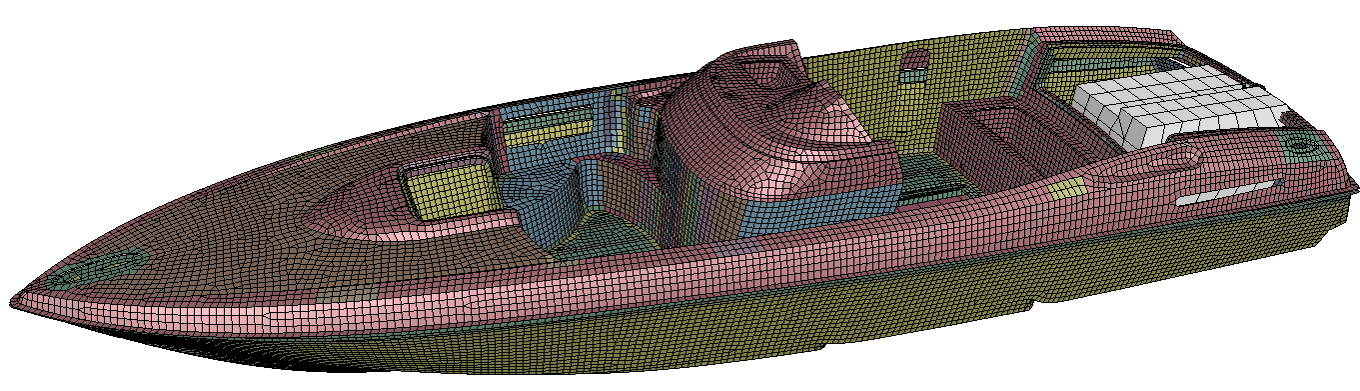
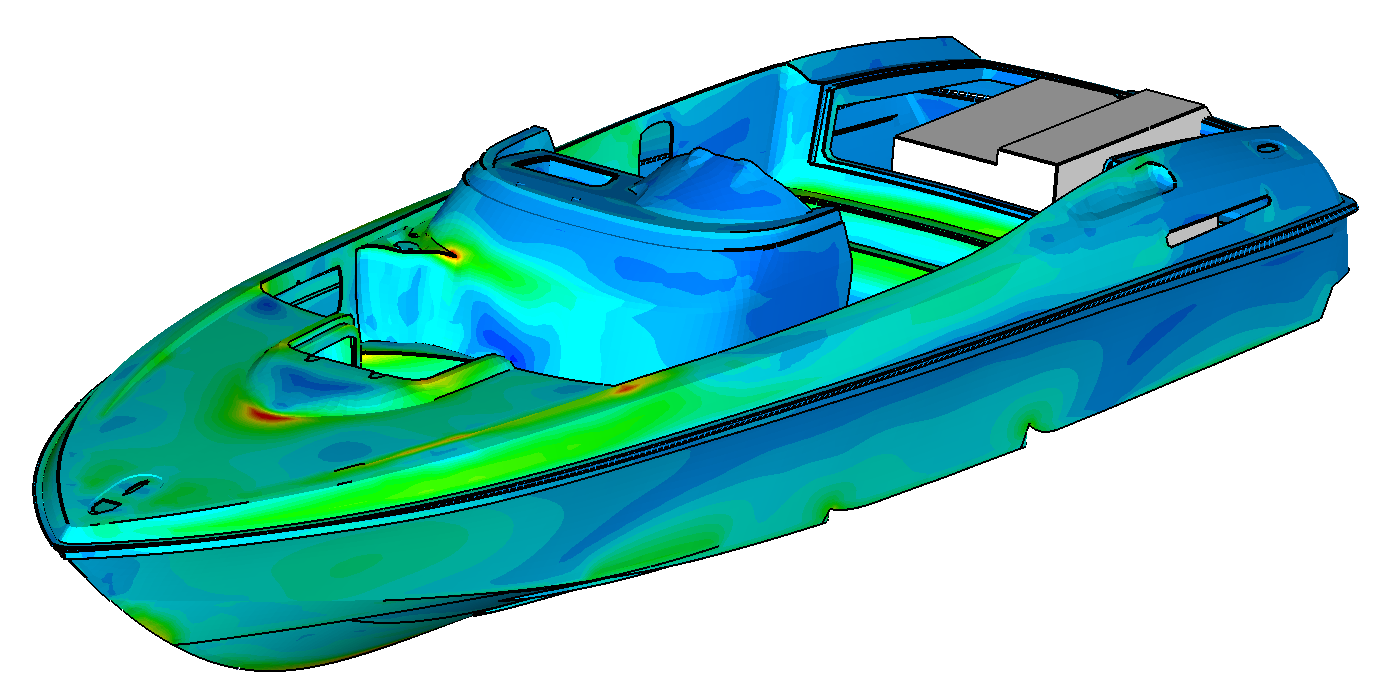
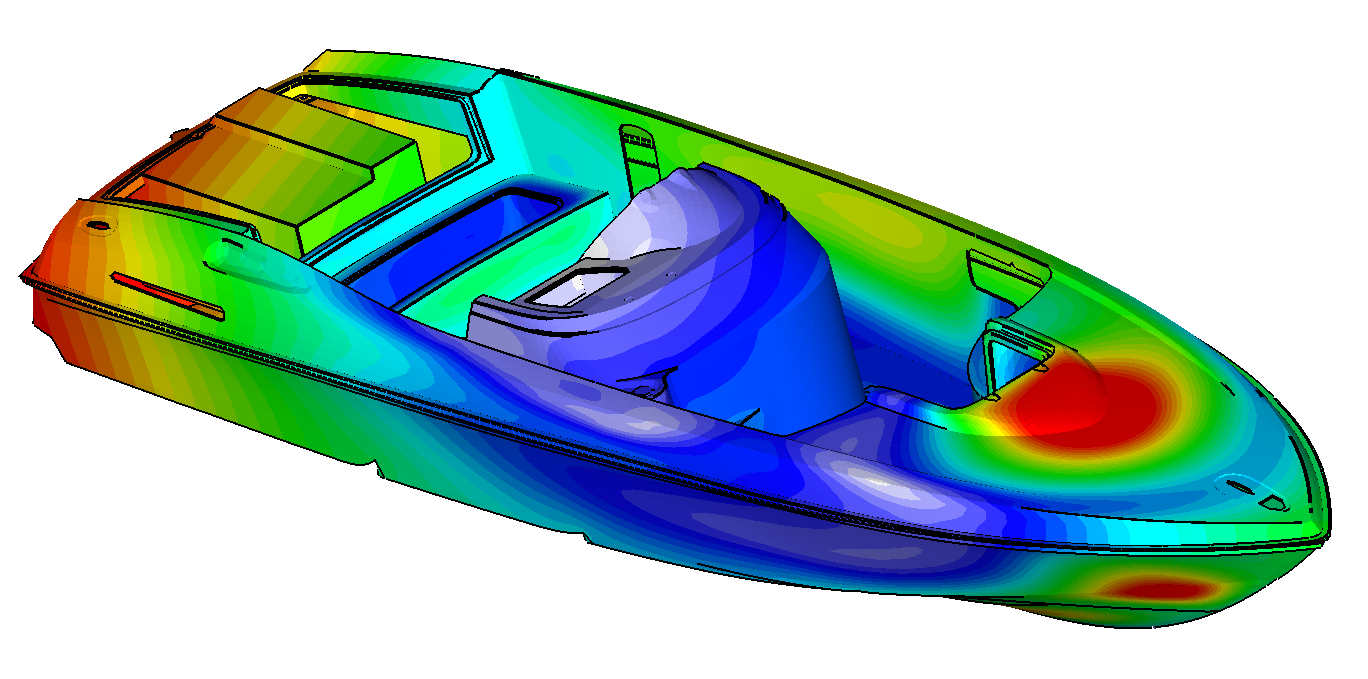
SmartCAE developed a detailed finite element model of the original composite hull, subjected to representative hydrodynamic loads encountered during navigation.
The structural analysis identified the regions where additional reinforcement was required, as well as areas where material could safely be removed to reduce weight.
Based on these findings, we worked closely with the customer to develop an optimized laminate schedule compatible with the existing manufacturing process. We also evaluated alternative fiber materials to further improve the hull’s structural performance while maintaining production feasibility.
Benefits for the client
SmartCAE’s extensive experience in the design and simulation of composite structures, combined with a thorough understanding of carbon fiber manufacturing processes, enabled the customer to rely on a single engineering partner throughout the optimization process.
The simulation-driven approach made it possible to evaluate multiple laminate configurations rapidly, ranging from the most cost-effective solutions to those delivering maximum structural performance.
This allowed the customer to select the optimal balance between weight, stiffness, strength, manufacturability, and cost, significantly reducing development time while increasing confidence in the final hull design before production.
Gallery
Validate your product before you build it.
What if you could reduce your prototyping costs by up to 80%? Would you like to know how?
With computer simulation, we help you predict your product's performance under real operating conditions before it is manufactured. By identifying design issues early, you can minimize costly iterations, reduce development time, and launch reliable products right the first time.
Contact us todayComposite Materials Engineering
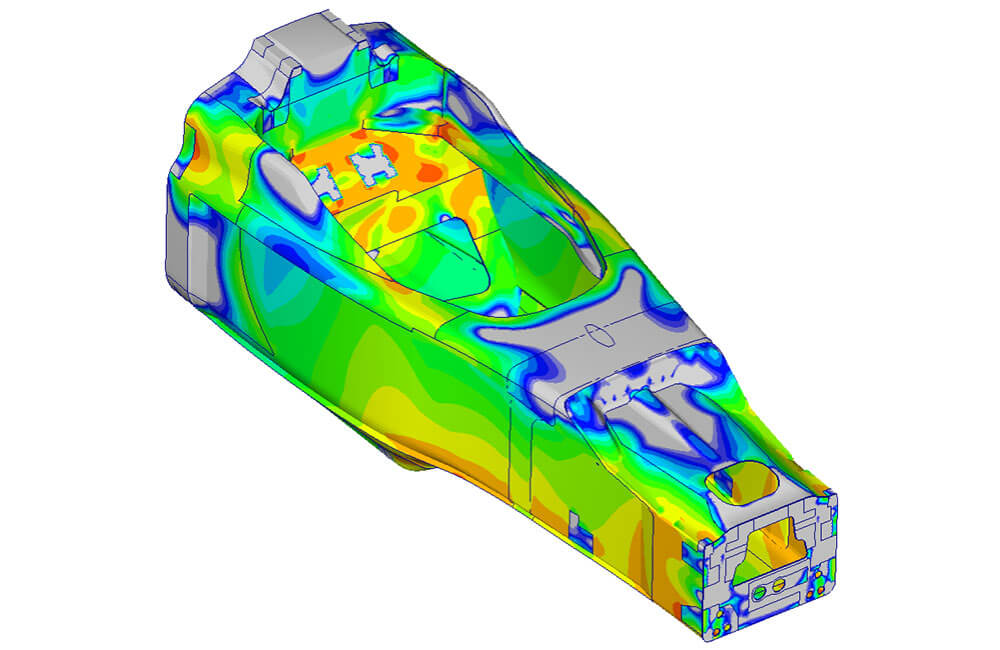
More and more components originally designed in metal are being replaced with high-performance composite materials such as carbon fiber, delivering superior mechanical performance while reducing weight. Let us help you design optimized composite structures.
Finite Element Structural Analysis FEA
Using finite element analysis FEA, we help companies identify potential product performance issues and implement design improvements long before physical prototypes are built. Learn more about our finite element analysis services.