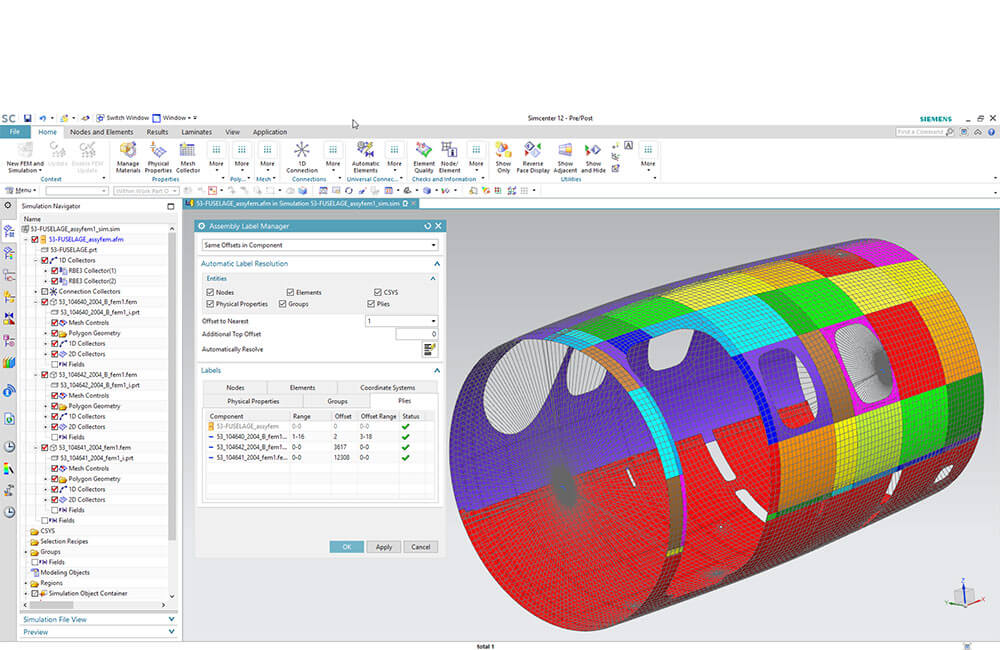
The problem
Developing a high-performance electric vehicle requires balancing passive safety with ambitious targets for lightweight design, structural stiffness, and the integration of complex systems such as the battery pack and its packaging constraints. When the primary structure is made from composite materials, the challenge becomes even greater: crash performance depends not only on geometry but also on the laminate architecture, core materials (such as structural foams), local reinforcements, and hybrid joints with metallic components.
In motorsport, this balance is a daily engineering challenge. Carbon fiber monocoques and chassis demonstrate that exceptional energy absorption can only be achieved when progressive failure, local instabilities, delamination, and manufacturing constraints are considered from the earliest stages of the design process. The objective is therefore not simply to pass a crash test, but to establish a robust engineering strategy that minimizes costly physical prototype iterations while delivering a repeatable, manufacturable, and high-performance solution.
The challenge
The project focused on developing a reliable crash simulation model for a multi-part composite body structure combining monolithic CFRP components, sandwich structures with foam cores, local reinforcements, and metallic inserts.
The vehicle body consisted of multiple subassemblies manufactured using different structural concepts, including reinforced side panels with foam-filled sections, sandwich roof panels, a monolithic floor structure, reinforced rear cross members, a metallic battery enclosure, and bonded and bolted joints. This combination of technologies directly influences load paths and collapse mechanisms during impact events.
Electric vehicle architecture introduces an additional critical requirement: protecting the battery compartment by controlling intrusion and deformation within the battery area and underbody while preventing localized load peaks that could result in severe structural damage.
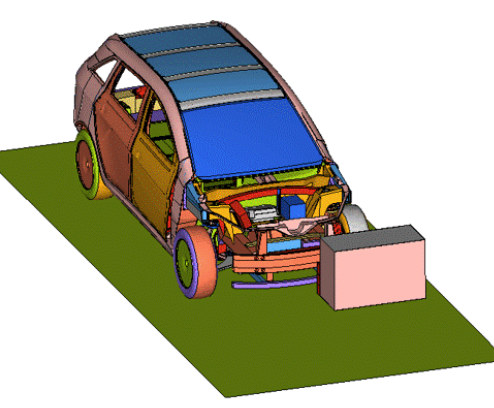
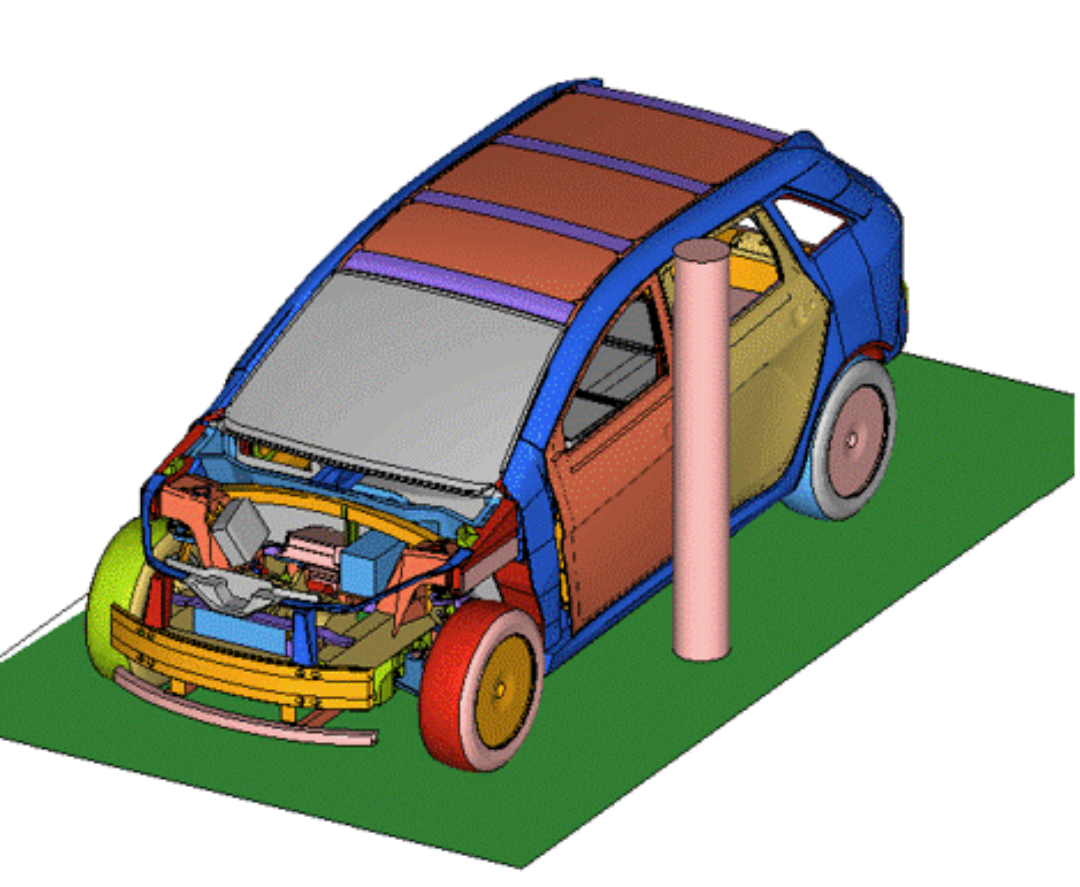
To validate the design concept, several representative crash scenarios based on internationally recognized regulations and industry protocols were analyzed, including full frontal impact, offset deformable barrier impact, side pole impact, rear impact, and roof crush. These simulations enabled the early identification of critical structural regions and guided the optimization of geometry, joints, and laminate architecture.
Our contribution
SmartCAE managed the project using the engineering methodology typically adopted in motorsport composite development. Starting from the CAD geometry, we developed a finite element model capable of accurately reproducing the behavior of composite materials while accounting for real manufacturing constraints, avoiding oversimplifications that can conceal structural weaknesses and generate misleading simulation results.
The model was organized into individual subassemblies, defining laminate properties such as ply thicknesses, fiber orientations, and local reinforcements. Sandwich structures with foam cores, stiffening elements, and hybrid integrations—including localized reinforcements and metallic components in strategically important areas—were accurately represented.
Particular attention was devoted to joint modeling. Wherever the composite structure interacted with metallic assemblies and the battery enclosure, adhesive bonds, bolted connections, and contact definitions were carefully modeled, as these interfaces often determine whether crash energy is dissipated progressively or concentrated into premature structural failures.
The crash simulations were then critically analyzed to investigate the characteristic failure mechanisms of CFRP structures, including compression damage in the floor and supporting structures, skin failure and foam core collapse during side impacts, and localized failures caused by stiffness transitions in reinforced regions.
Drawing on extensive experience with high-performance composite monocoques and structural components, SmartCAE transformed numerical simulation results into practical engineering recommendations, balancing crash performance, global structural stiffness, and manufacturability, including advanced production technologies such as High-Pressure RTM and the integration of local reinforcements and metallic inserts.
Benefits for the client
The primary benefit for the customer is a product development process driven by engineering simulation rather than costly trial-and-error prototype testing. When composite crash simulations are built correctly, they identify at an early stage where the structure efficiently absorbs impact energy and where undesirable collapse mechanisms are likely to occur.
This capability is especially valuable for electric vehicles, where battery protection and intrusion management must be incorporated into the structural architecture from the earliest design phases rather than addressed through late-stage modifications.
SmartCAE’s motorsport expertise in composite engineering provides an additional competitive advantage. We can accurately interpret progressive damage mechanisms and translate them into practical design improvements by optimizing local reinforcements, maintaining fiber continuity, managing stiffness transitions, and strategically integrating metallic components only where they provide real structural benefits.
As a result, customers benefit from faster and better-informed engineering decisions, fewer expensive design iterations, reduced risks during physical validation, and composite structures that are more robust against the natural variability of composite manufacturing processes—including thickness tolerances, bonding quality, and process variations—while achieving the high levels of performance expected from next-generation electric vehicles.
Gallery
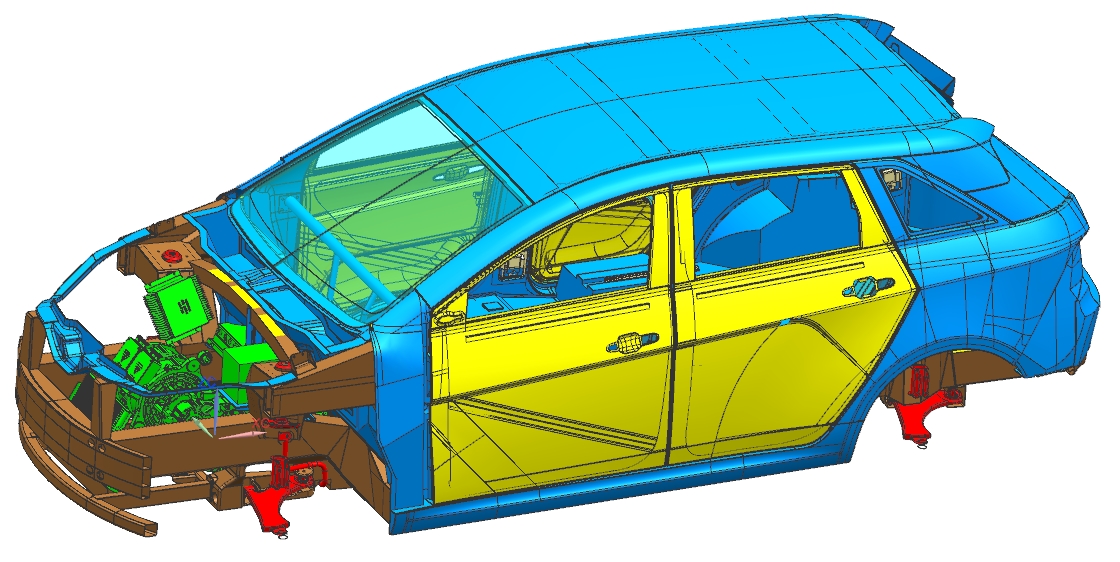
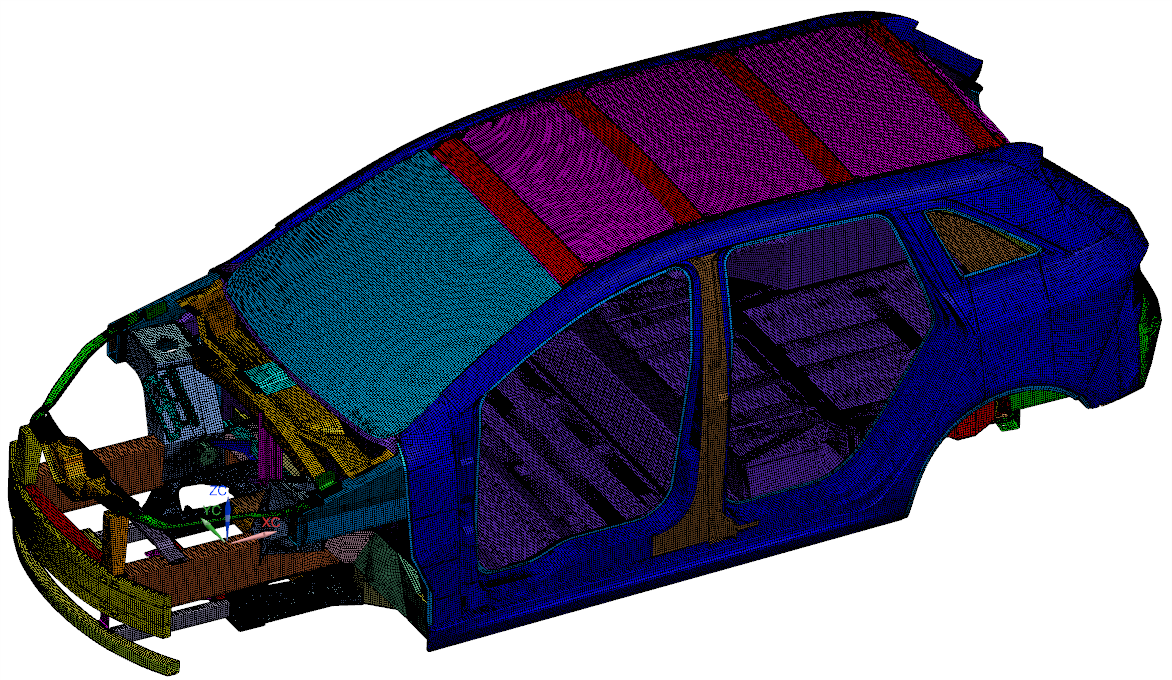
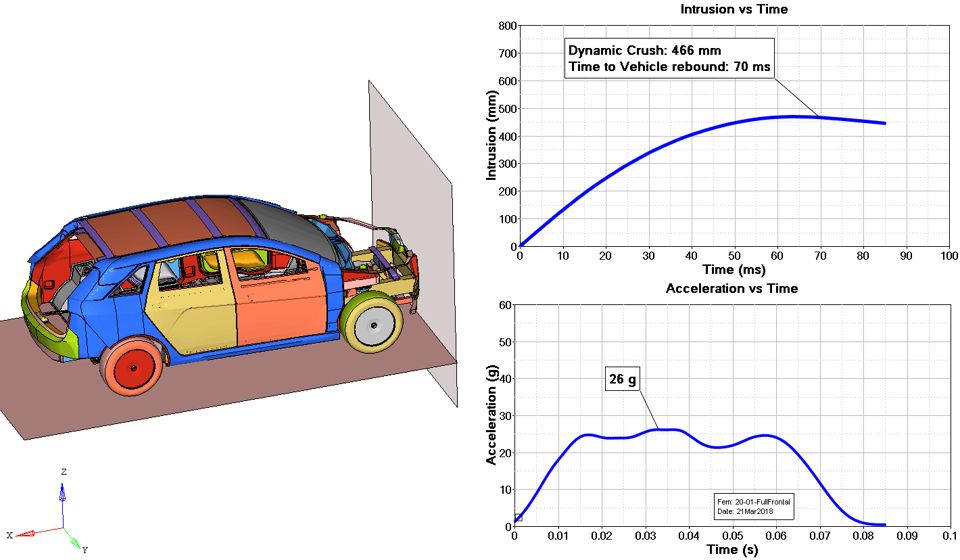
Gallery
Validate your product before you build it.
What if you could reduce your prototyping costs by up to 80%? Would you like to know how?
With computer simulation, we help you predict your product's performance under real operating conditions before it is manufactured. By identifying design issues early, you can minimize costly iterations, reduce development time, and launch reliable products right the first time.
Contact us todayFinite Element Structural Analysis FEA
Using finite element analysis FEA, we help companies identify potential product performance issues and implement design improvements long before physical prototypes are built. Learn more about our finite element analysis services.
Composite Materials Engineering
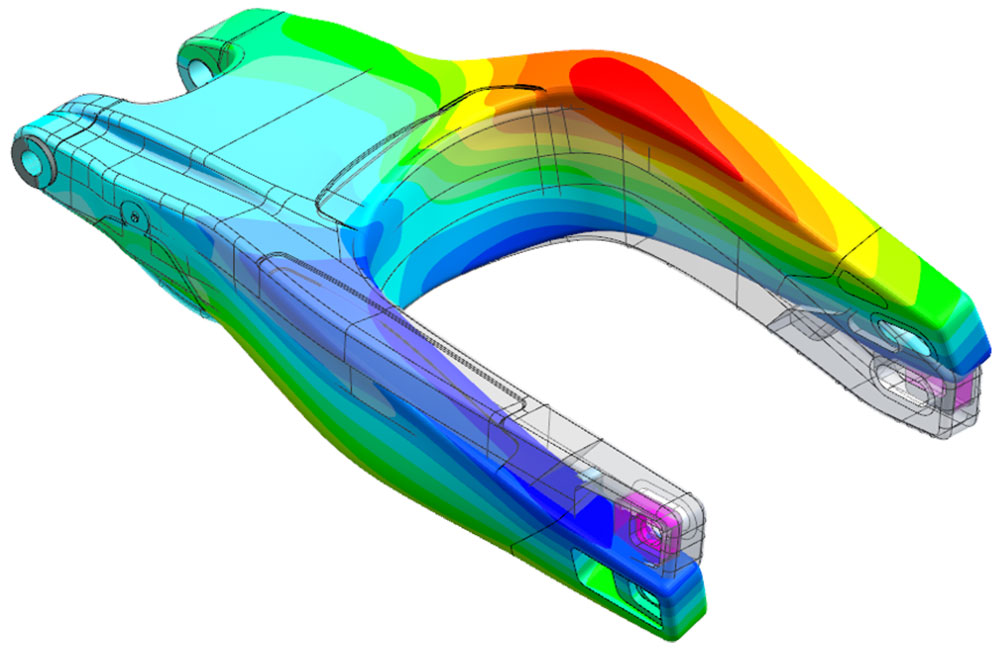
More and more components originally designed in metal are being replaced with high-performance composite materials such as carbon fiber, delivering superior mechanical performance while reducing weight. Let us help you design optimized composite structures.
Crash & Impact Analysis
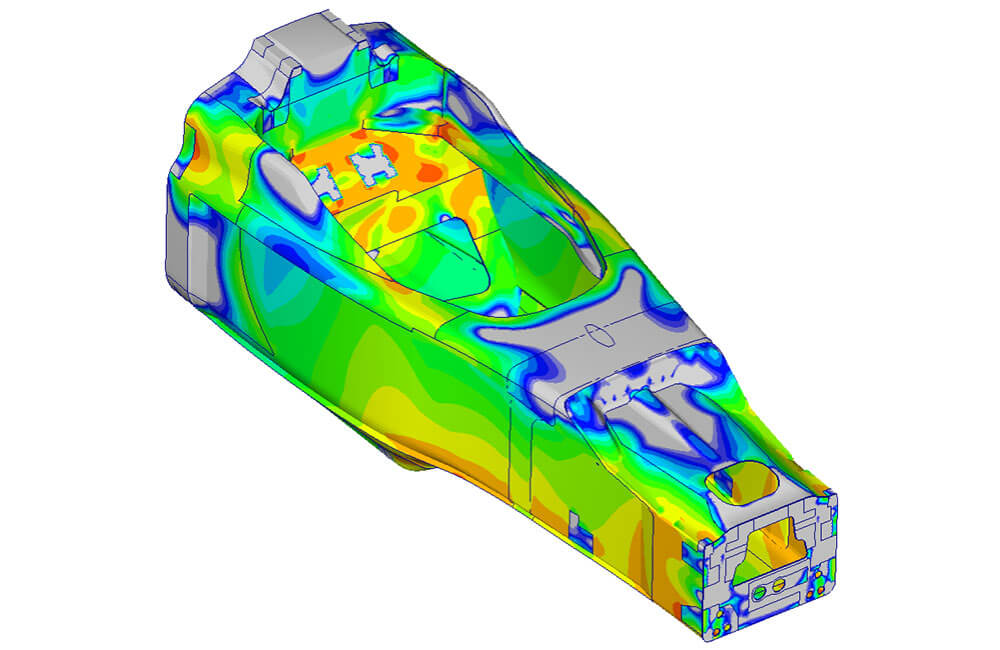
When structures experience rapidly changing loads, equivalent static analyses are no longer sufficient to accurately predict their behavior. Leveraging years of experience, we perform advanced nonlinear crash and impact simulations for both metallic and composite structures.
CAE Analysis Software
Looking to integrate Virtual Prototyping into your engineering workflow?
Discover our range of CAE software solutions and expert mentoring services. Our specialists will help you select the solution that best fits your needs and ensure its successful integration into your product development process. Contact us today for a free technical assessment.
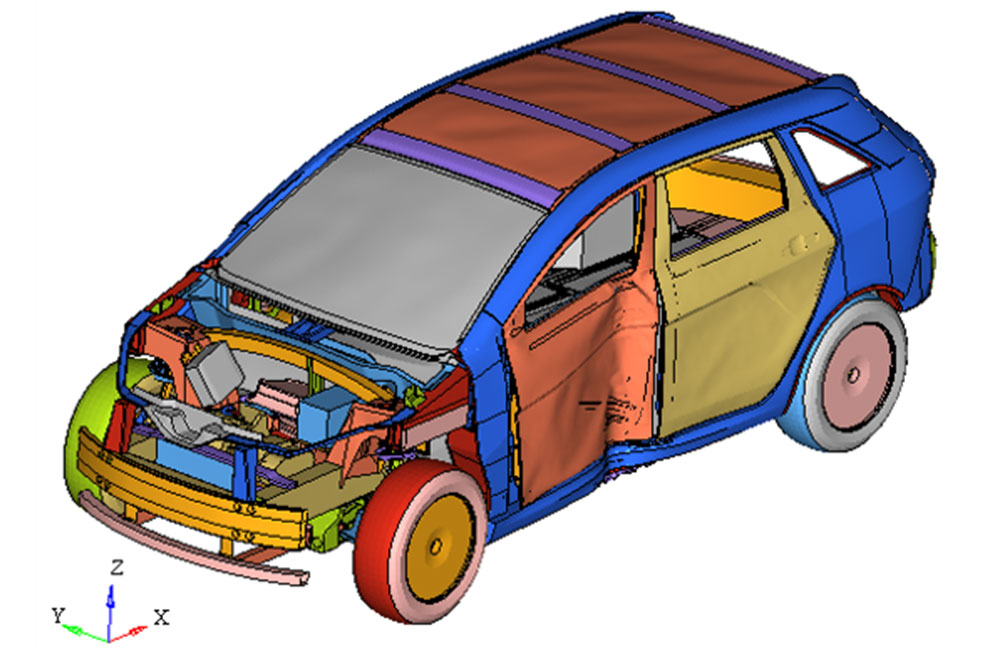
View all softwareSimcenter Hypermesh
Advanced FEA modeling, intelligent workflows, and scalable performance all within a single platform designed for innovative engineers and product designers.
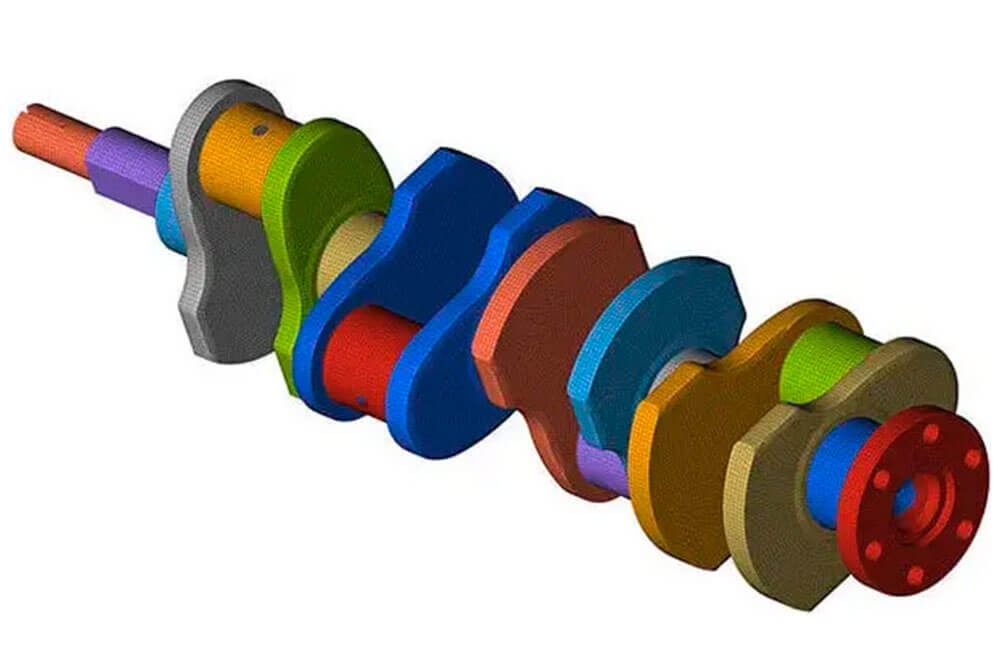
Simcenter Radioss
Simcenter Radioss is used worldwide for complex simulations involving crashworthiness, impact, drop tests, explosions, and high-speed events. It is the ideal solution for accurately predicting product behavior under extreme dynamic loading conditions.
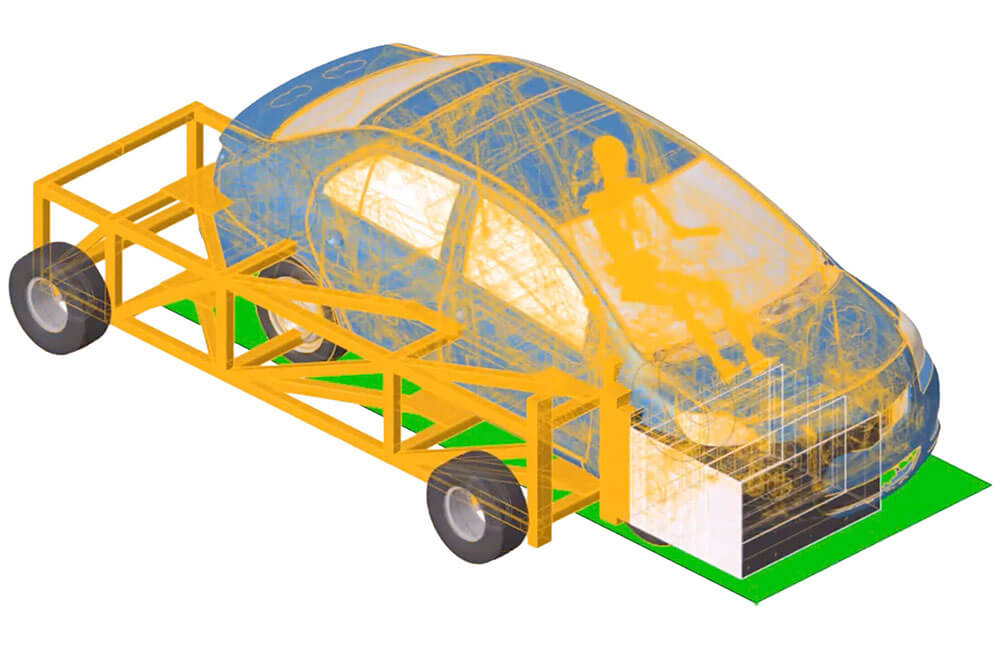
Laminate Tools
Laminate Tools is an integrated tool that simplifies the design, structural verification, and manufacturing of composite laminates. With Laminate Tools, you can overcome the limitations of traditional approaches to both FEM modelling and the generation of ply shapes and ply books for composite parts.
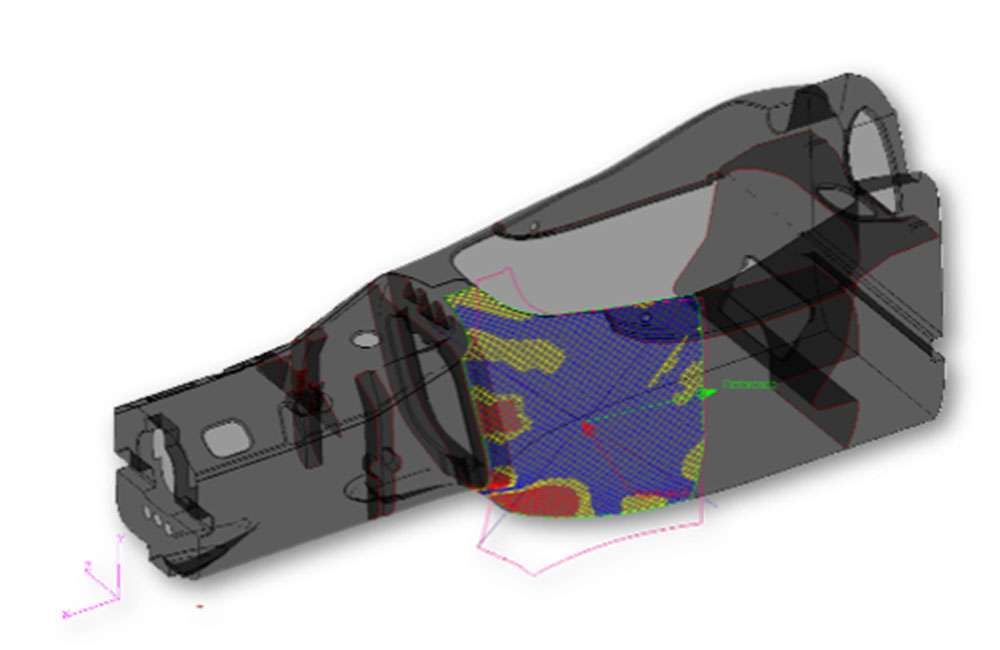
Simcenter 3D for Composites
Simcenter 3D is a comprehensive solution for product and process simulation of composite components manufactured using prepreg fibres and hand layup techniques with autoclave curing.