The problem
In the field of lightweight composite structures, a product’s competitiveness often depends on achieving the right balance between weight, stiffness, and manufacturing repeatability. When designing a high-performance bicycle frame, every gram of weight saved must be carefully balanced through the optimization of fiber orientations, laminate stacking sequences, and local reinforcement areas.
The engineering challenge is twofold. On one hand, overly conservative designs increase weight and reduce performance. On the other, excessive weight reduction can compromise stiffness in critical structural regions, leading to inconsistent performance between prototypes and production components.
Adding to the complexity, the structurally most efficient solutions are not always the easiest to manufacture. They may require numerous fabric variants, difficult ply orientations, or locally complex laminate thicknesses that reduce manufacturing efficiency and repeatability.
In this context, simulation and constraint-driven optimization become essential engineering tools, transforming the objective of creating a lightweight yet stiff structure into practical, manufacturable design solutions.
The challenge
The project focused on developing an automated layup optimization process for a composite bicycle frame, starting from an existing finite element model and material characterization data provided by the customer.
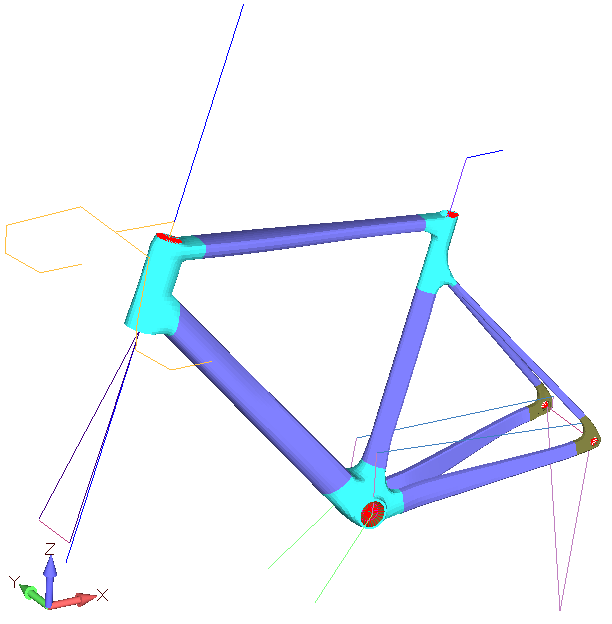
The objective was to minimize the overall structural mass while satisfying a series of stiffness and comfort requirements evaluated through representative load cases. These included steering head stiffness, bottom bracket stiffness under different pedaling load configurations, and a dedicated vertical loading condition used to assess rider comfort.
From an optimization perspective, a free-size optimization approach was adopted, allowing the solver to determine the optimal local laminate thickness distribution. Separate design variables were assigned to woven fabric plies and unidirectional plies, while allowable fiber orientations included 0°, 90°, ±22°, and ±45°.
To ensure that the optimization results could be translated into a realistic laminate design, manufacturing constraints were introduced. These included a maximum laminate thickness limit and, in a second optimization strategy, a minimum thickness constraint, preventing mathematically optimal yet impractical solutions.
Our contribution
SmartCAE managed the complete optimization workflow, beginning with a thorough review of the finite element model and the stiffness evaluation criteria associated with each loading condition.
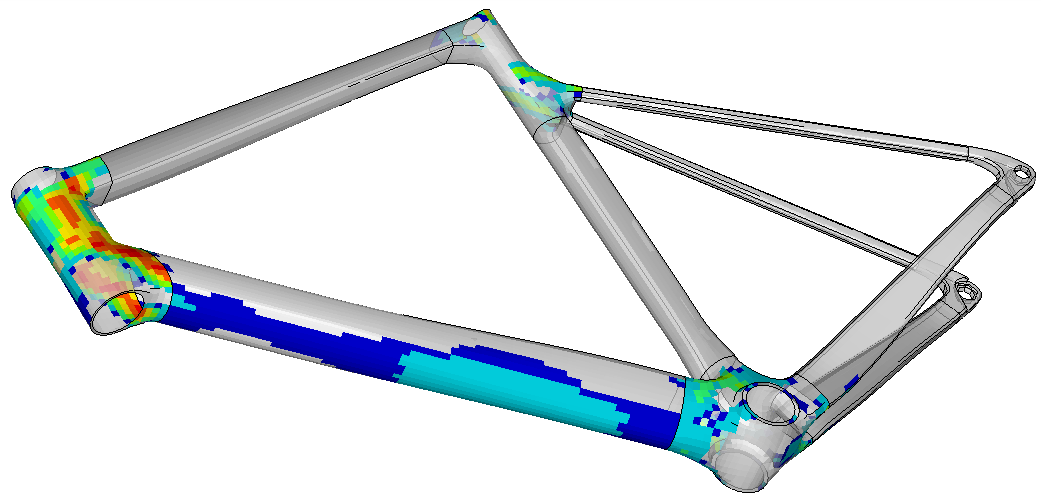
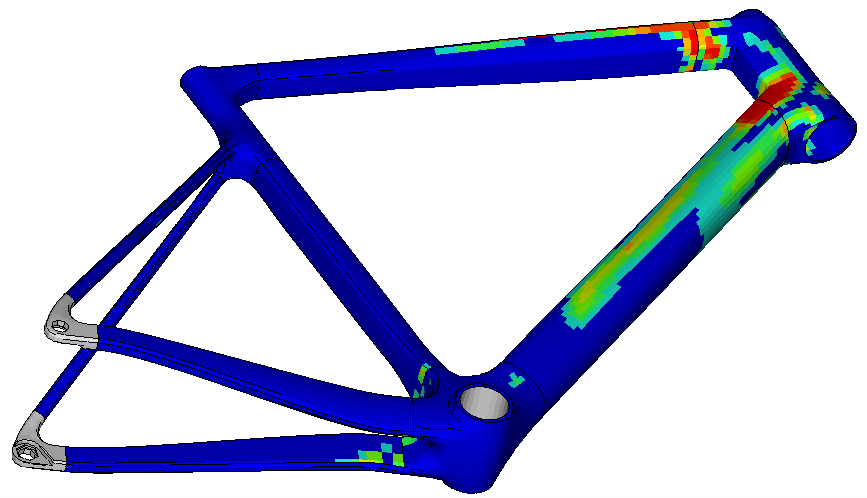
We defined the optimization design regions, distinguishing the primary structural areas from those excluded from optimization, and established a consistent set of design variables for the different ply types and fiber orientations. This enabled the generation of clear and comparable laminate thickness maps.
Two free-size optimization strategies were then executed while incorporating laminate manufacturing constraints and carefully monitoring the numerical stability of the optimization process.
Once the analyses were completed, SmartCAE interpreted the results from an engineering perspective, demonstrating how the optimal distribution of fiber orientations and local reinforcements evolves according to the applied constraints. The resulting thickness maps were transformed into practical laminate design recommendations suitable for manufacturing, with particular attention given to the critical areas governing both global stiffness and local structural response.
Benefits for the client
This approach enabled the customer to make objective, data-driven engineering decisions while significantly reducing the trial-and-error iterations that typically characterize composite product development.
Having access to an optimized reference solution, together with a clear understanding of where structural material is actually required, which reinforcement type is most effective, and which fiber orientations best support the different loading conditions, accelerates convergence toward the final laminate design while maintaining control over both structural performance and manufacturability.
Constraint-driven optimization also identifies meaningful weight reduction opportunities without compromising the stiffness required by functional testing or introducing unrealistic manufacturing solutions. At the same time, it highlights engineering sensitivities and trade-offs—such as the balance between structural stiffness and rider comfort—well before physical prototypes are produced.
By combining advanced simulation, performance-driven engineering, and manufacturing constraints, SmartCAE helps customers reduce technical risk, shorten development time, minimize redesign costs, and deliver composite structures that are both highly optimized and ready for efficient industrial production.
Gallery
Validate your product before you build it.
What if you could reduce your prototyping costs by up to 80%? Would you like to know how?
With computer simulation, we help you predict your product's performance under real operating conditions before it is manufactured. By identifying design issues early, you can minimize costly iterations, reduce development time, and launch reliable products right the first time.
Contact us todayFinite Element Structural Analysis FEA
Using finite element analysis FEA, we help companies identify potential product performance issues and implement design improvements long before physical prototypes are built. Learn more about our finite element analysis services.
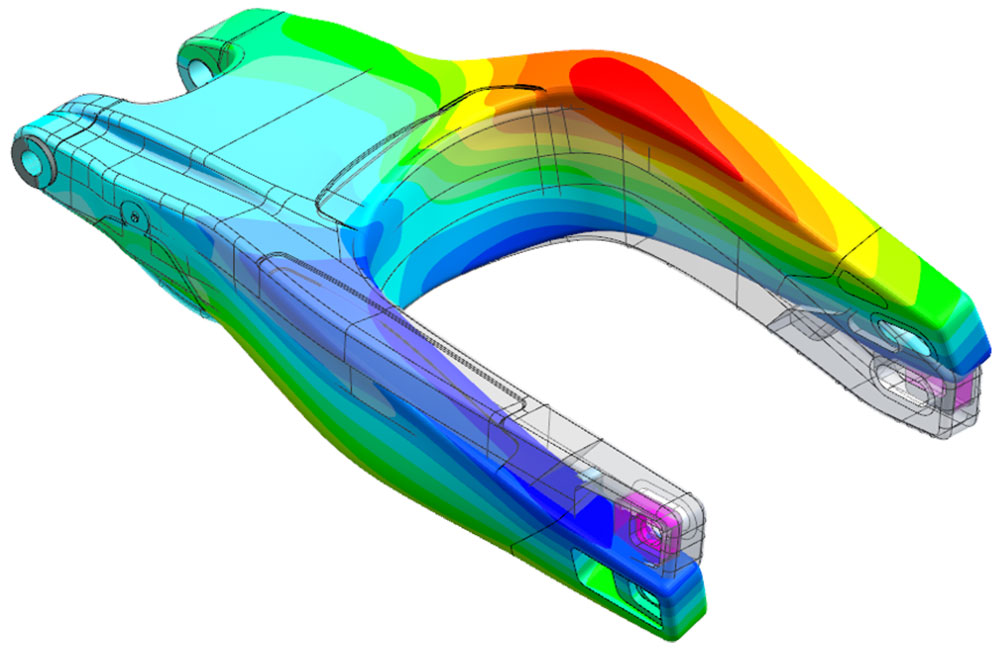
Composite Materials Engineering
More and more components originally designed in metal are being replaced with high-performance composite materials such as carbon fiber, delivering superior mechanical performance while reducing weight. Let us help you design optimized composite structures.
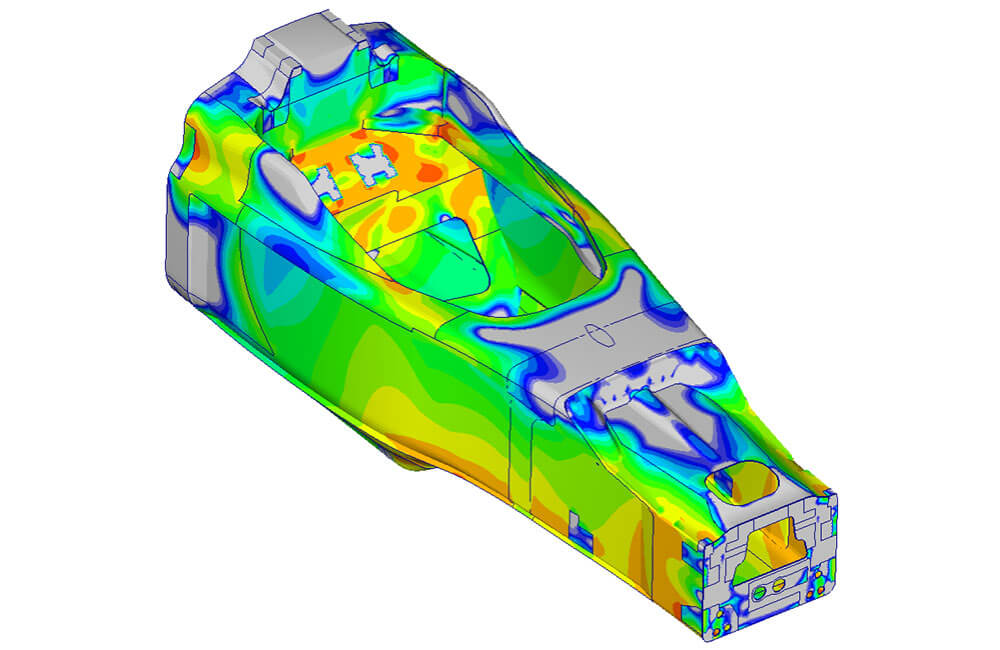
CAE Analysis Software
Looking to integrate Virtual Prototyping into your engineering workflow?
Discover our range of CAE software solutions and expert mentoring services. Our specialists will help you select the solution that best fits your needs and ensure its successful integration into your product development process. Contact us today for a free technical assessment.
View all softwareSimcenter Optistruct
Design smarter, lighter, and more efficient products with Simcenter Optistruct, the FEA solver that combines advanced analysis and structural optimization in a single integrated platform. Reliable, scalable, and state-of-the-art, it is the ideal choice for taking your product engineering to the next level.
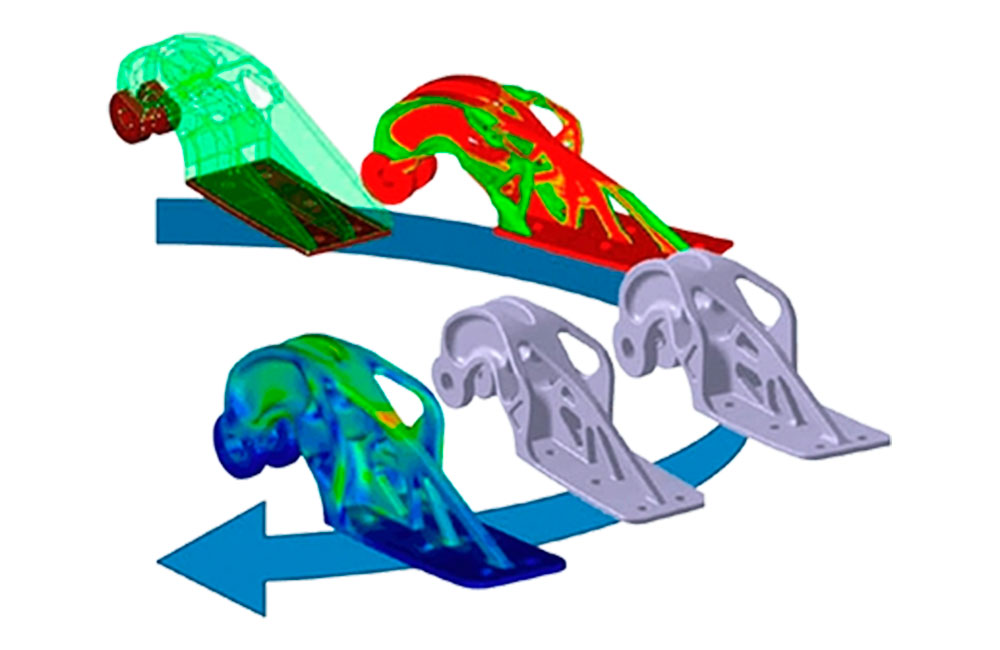
Laminate Tools
Laminate Tools is an integrated tool that simplifies the design, structural verification, and manufacturing of composite laminates. With Laminate Tools, you can overcome the limitations of traditional approaches to both FEM modelling and the generation of ply shapes and ply books for composite parts.
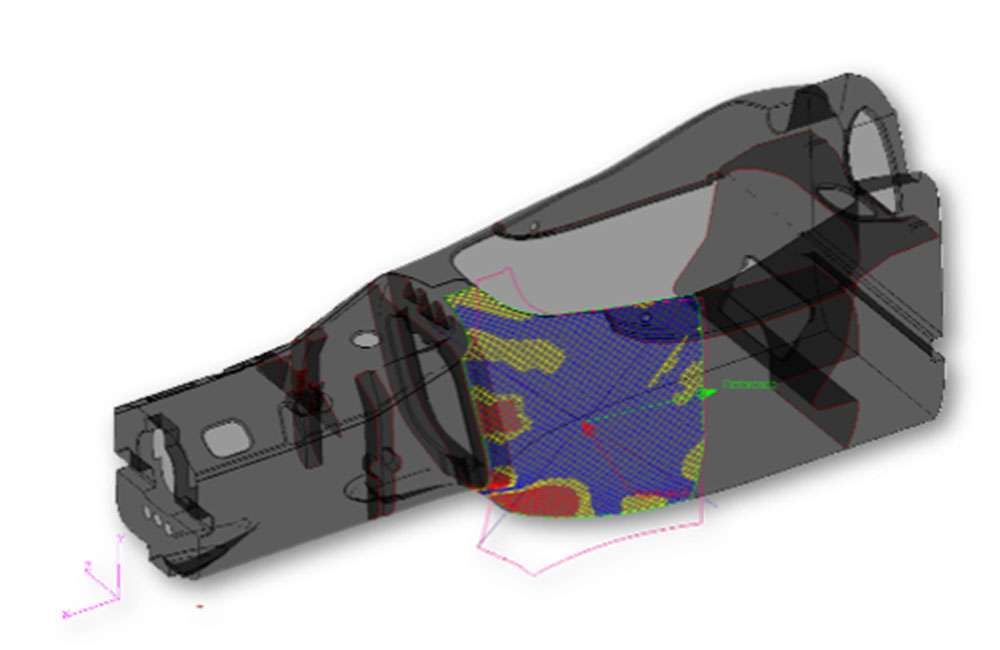
Simcenter 3D for Composites
Simcenter 3D is a comprehensive solution for product and process simulation of composite components manufactured using prepreg fibres and hand layup techniques with autoclave curing.