Composite Materials
Trust SmartCAE to develop, optimize, and bring your carbon fiber product design to life.Download Brochure Request information
Composites are fiber-reinforced plastics that combine stiffness, mechanical strength, and lightweight properties. For this reason, since their invention, they have been widely used in high-performance applications, from space missions to motorsport.
Over the years, we have developed a reliable methodology based on computer-aided simulation to study this class of structures.
We are currently able to manage the entire design process of a composite component, starting from feasibility studies to the optimization of mechanical performance, including the coordination of production phases and experimental product qualification.
Reducing costs and time-to-market with simulation
The Challenges of Composite Design
In the design and optimization of laminated composite materials, it is essential to leverage computer simulation to create products that deliver the desired performance while remaining economically sustainable and easy to manufacture.
The choice of reinforcement type, ply thickness, fiber orientation, and stacking sequence represents a wealth of opportunities to achieve the target mechanical performance. However, this high number of variables introduces significant design complexity, which is difficult to manage even with traditional FEM (Finite Element Method) analysis tools.
Furthermore, current hand-layup production technology is a manual process that requires an accurate feasibility study to ensure that the composite layers can actually be draped onto the mold in the ways and with the fiber orientations intended during the sizing phase.
The design of these components therefore requires specific expertise and tools to manage all the technological aspects of laminates
How SmartCAE Supports Composite Design
Over 20 years of engineering expertise at your service.
Simulating structures made of composite materials is one of SmartCAE’s core competencies. Our activities include:
We help you evaluate the feasibility of a composite component. For example, if you are considering replacing metal mechanical parts with carbon fiber equivalents, we can support your project by selecting the most appropriate material and identifying the best supplier for production.
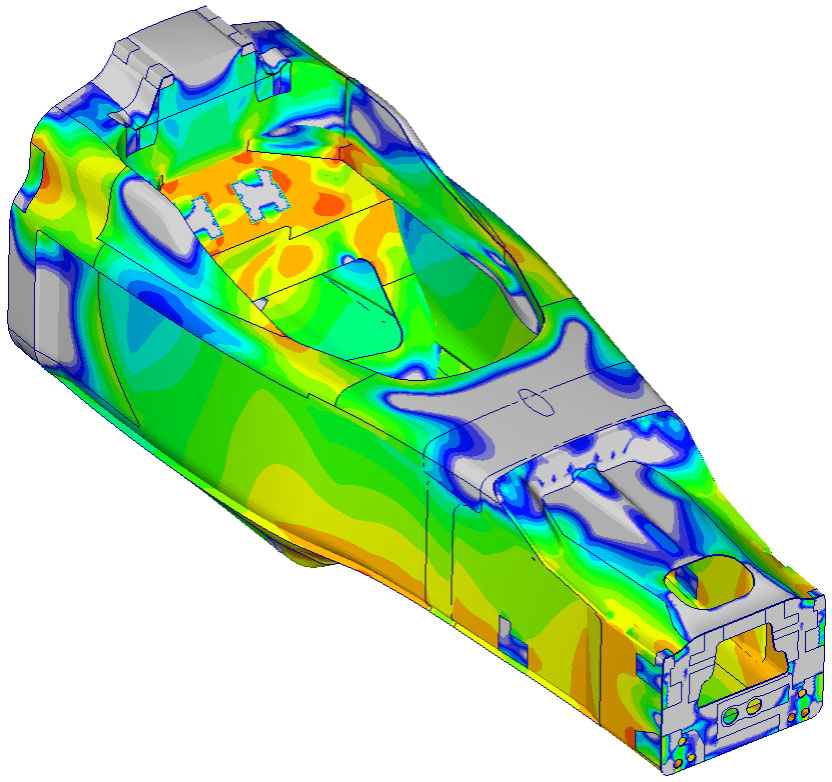
Through Finite Element Modeling, it is possible to predict the mechanical performance of the composite structure. Using composite FEM analysis, we can identify potential structural issues regarding strength and stiffness and propose improvements to the stacking sequence.
Composite materials offer designers significant room for maneuver to create lightweight, high-performance parts. However, the pursuit of peak performance often leads to increased costs due to lamination complexity. We have developed a reliable method to modify ply layup to improve mechanical performance while respecting the client’s technological constraints and manufacturing processes. This simplifies the lamination process and keeps production costs under control.
Carbon fiber crash structures can absorb more energy per unit weight than metallic ones. The challenge in modeling the crash behavior of such structures lies in the various failure mechanisms of the laminate.
Different stacking sequences, fiber orientations, and resin types have a major impact on the crash behavior of the collapsible structure. Over the years, we have refined testing and FEM modeling methods to accurately simulate this class of structures.
Both structural verifications under static loads and dynamic crash tests require reliable data to calculate First-Ply-Failure (FPF) or progressive laminate damage. This data can be obtained through experimental tests (standardized or custom) to determine the actual properties of the composite used. We support our clients in defining experimental tests for the mechanical characterization of composite properties.
Validate your product before you build it.
What if you could reduce your prototyping costs by up to 80%? Would you like to know how?
With computer simulation, we help you predict your product's performance under real operating conditions before it is manufactured. Partner with us to eliminate design errors, optimize performance, and bring better products to market faster. Contact us today for a free consultation.
Contact us todayCAE Analysis Software
Looking to integrate Virtual Prototyping into your engineering workflow?
Discover our range of CAE software solutions and expert mentoring services. Our specialists will help you select the solution that best fits your needs and ensure its successful integration into your product development process. Contact us today for a free technical assessment.
View all softwareLaminate Tools
Laminate Tools is an integrated tool that simplifies the design, structural verification, and manufacturing of composite laminates. With Laminate Tools, you can overcome the limitations of traditional approaches to both FEM modelling and the generation of ply shapes and ply books for composite parts.
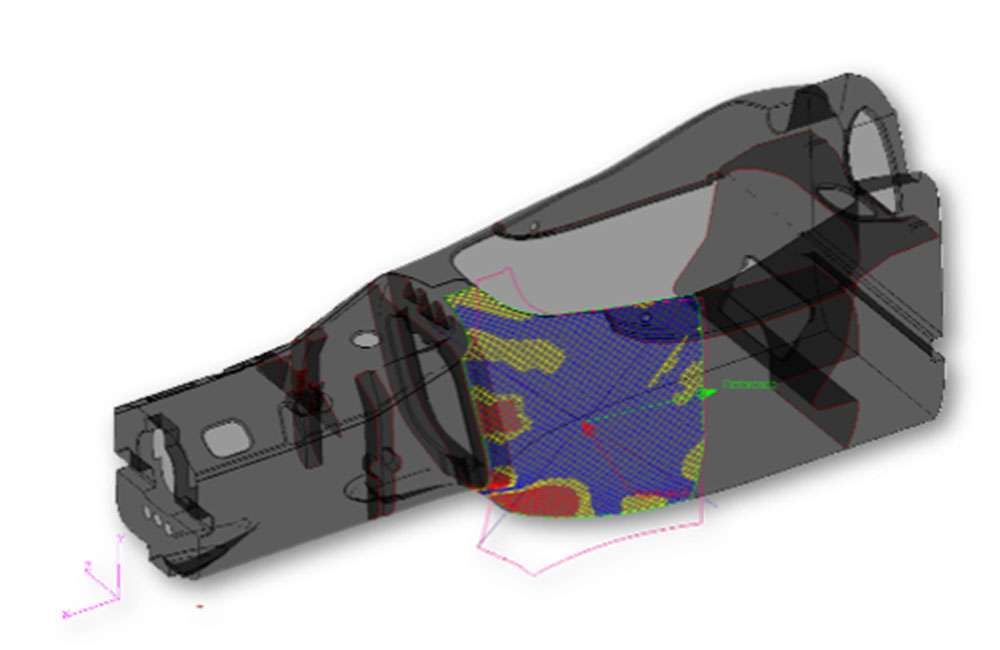
OptiAssist for Composites
OptiAssist is an optimization software solution that improves laminate performance while respecting the geometric and manufacturing constraints of composite materials. With OptiAssist, you can achieve highly efficient laminates that are also manufacturable.
Simcenter 3D for Composites
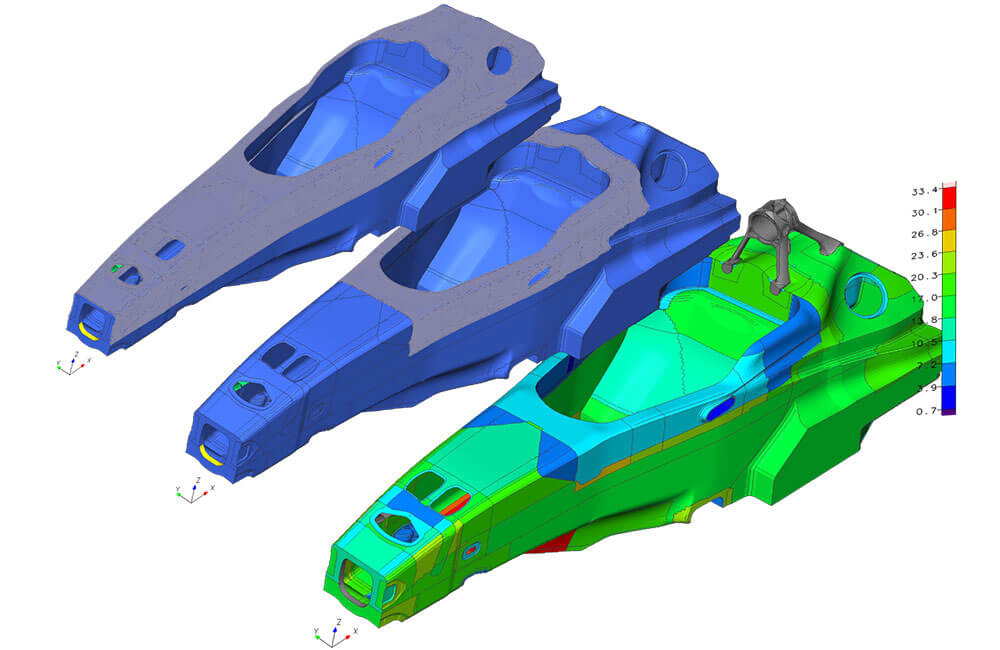
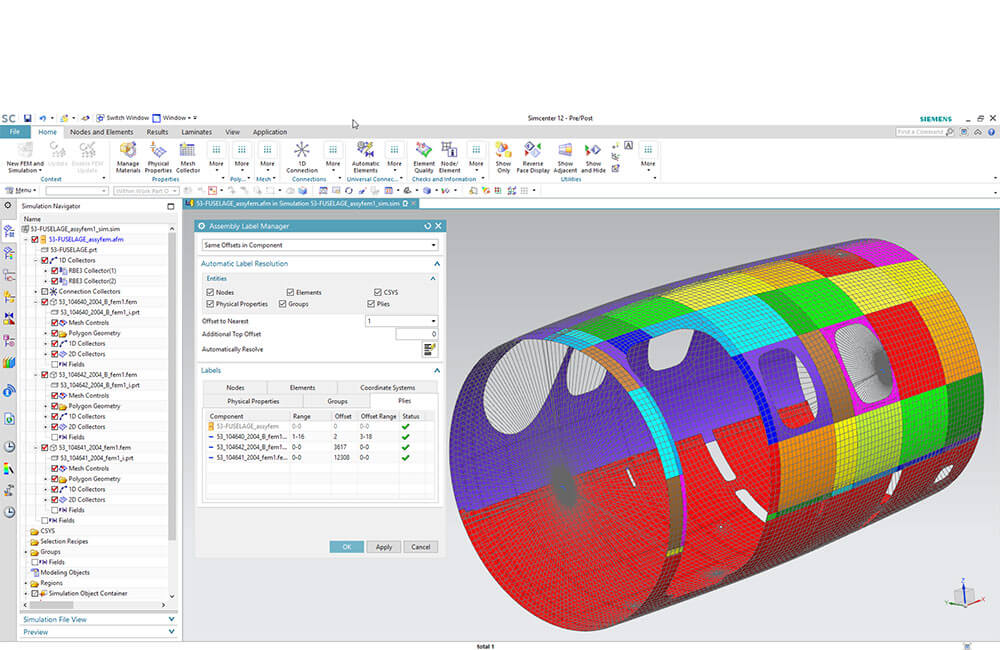
Simcenter 3D is a comprehensive solution for product and process simulation of composite components manufactured using prepreg fibres and hand layup techniques with autoclave curing.
Simcenter Femap for Composites
The use of composite materials in product design has grown significantly in recent years, and Simcenter Femap can help you model composite structures and interpret their results.