FEM-Test Correlation Analysis
Discover how to link FEM analysis results with experimental measurements to deeply understand product behavior and improve the accuracy of your Digital Twin.Download Brochure Request information
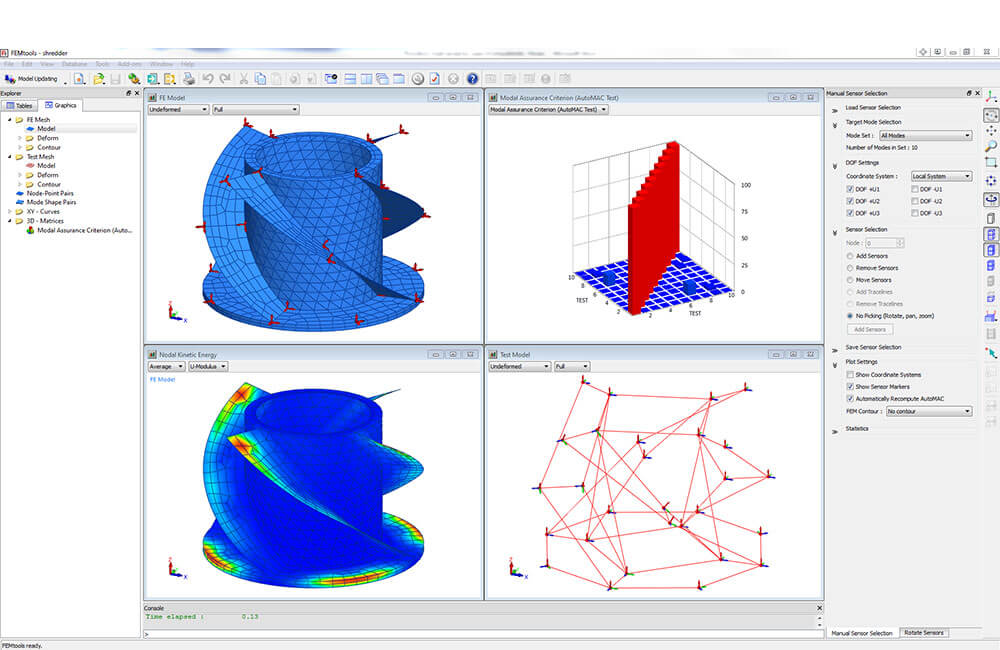
The term “FEM-Test Correlation” commonly refers to a series of standard criteria and established numerical methods that allow for the qualitative and quantitative comparison of results produced by Finite Element Analysis (FEA) with experimental measurements.
Often, many parameters in a finite element analysis are uncertain and are assumed a priori by the analyst. This explains certain discrepancies between simulation behavior and the results produced by the physical structure in the lab or in operation.
Through FEM-Test correlation analysis, it is possible to derive quantitative numerical indices that express similarities and differences between the finite element model and the experimental model, helping companies create a truly predictive “Digital Twin” of their product.
Improving product understanding
The Benefits of FEM-Test Correlation Analysis
To reduce development time and costs, companies are implementing the Digital Twin paradigm — a digital replica of the product through which all possible operating conditions can be modeled and simulated.
This approach requires that the data used for simulations be perfectly aligned with the physical behavior of the prototype as measured experimentally.
To reduce the uncertainty and approximations of the Digital Twin, FEM-Test correlation analysis provides a series of standardizable and repeatable procedures for Model Verification and Validation (V&V) and calibration (Model Updating).
A more accurate analytical model allows companies to reduce uncertainty during the design phase, enabling better and faster decision-making and increasing profit margins.
FEM-Test Correlation Services by SmartCAE
Over 20 years of engineering expertise at your service.
The ability to pair an FEM model with its experimental counterpart opens the door to numerous scenarios:
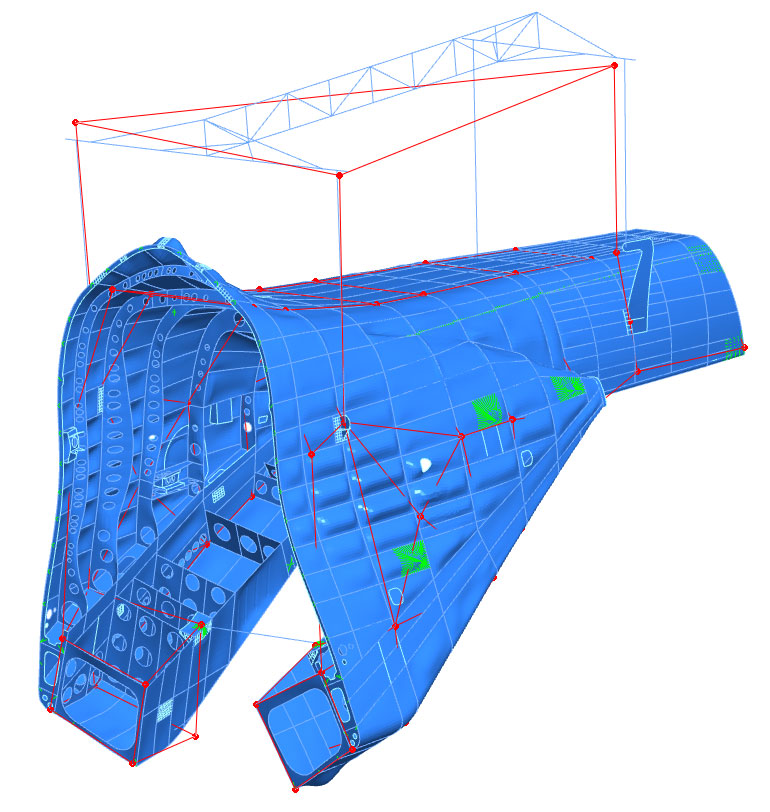
FEM results can be used to plan experimental measurement campaigns, predicting potential errors related to the measurement chain (e.g., sensor placement).
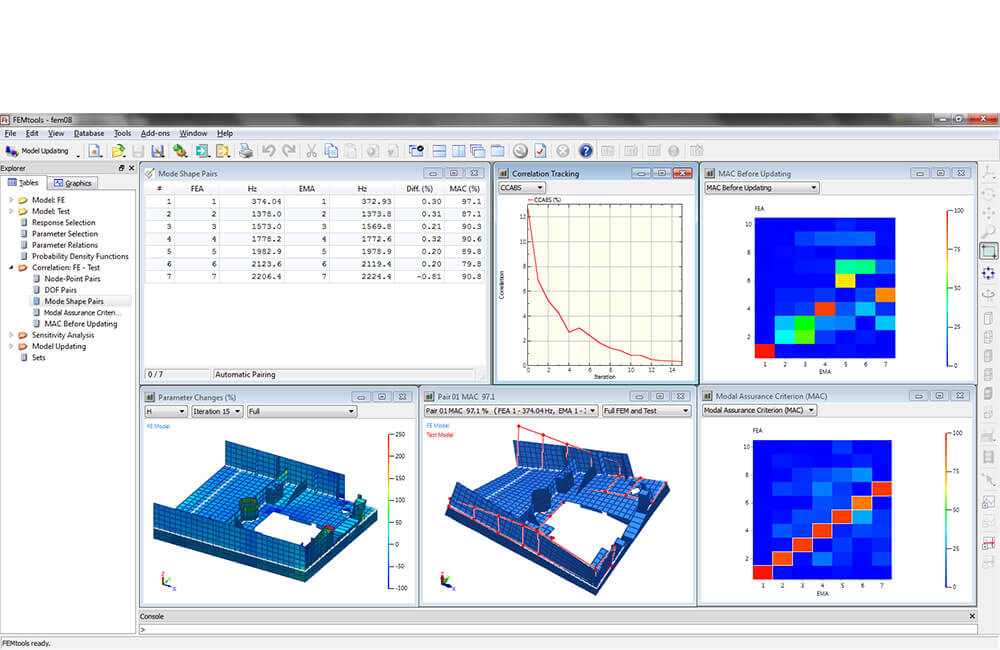
With both experimental and FEM results available, they can be overlaid to identify the primary causes of discrepancy. Among the correlation indices, MAC (Modal Assurance Criterion) and XOR are recognized data points for expressing similarities and differences between the FEM model and the Test.
Correlation indices can be used as the objective function in a model calibration process. Tools like FEMtools allow for automatic Model Updating procedures to synthesize a calibrated FEM model.
Validate your product before you build it.
What if you could reduce your prototyping costs by up to 80%? Would you like to know how?
With computer simulation, we help you predict your product's performance under real operating conditions before it is manufactured. Partner with us to eliminate design errors, optimize performance, and bring better products to market faster. Contact us today for a free consultation.
Contact us todayCAE Analysis Software
Looking to integrate Virtual Prototyping into your engineering workflow?
Discover our range of CAE software solutions and expert mentoring services. Our specialists will help you select the solution that best fits your needs and ensure its successful integration into your product development process. Contact us today for a free technical assessment.
View all softwareFEMtools Model Updating
FEMtools Model Updating is a tool for calibrating finite element model parameters using correlation indicators against experimental measurements.
FEMtools Pretest and Correlation
FEMtools Pretest and Correlation is a complete solution for Modal Pretest Analysis and Model Validation using FEA-Test correlation indicators.