Thermal and Thermo-Structural Analysis
Partner with us to study and optimize your product's thermal performance before it is even built.Download Brochure Request information
Thermal analysis allows for the calculation of temperature distribution across every point of a system and the resulting heat flows, utilizing heat transfer equations for radiation, conduction, and convection.
Typically, heat transfer is a non-linear phenomenon because heat transfer coefficients are themselves temperature-dependent, making it difficult to predict using traditional hand calculations.
Through thermal analysis performed via FEM (Finite Element Method) or CFD (Computational Fluid Dynamics) modeling, it is possible to accurately determine temperature distribution and heat paths within the product before a physical prototype is created.
Reducing costs and time-to-market with simulation
The Benefits of Thermal Analysis
Thermal testing of a system is expensive because it requires a physical prototype, with all the associated economic and technological implications.
In the unfortunate event that the product fails the test, the design must be modified and the entire test repeated, leading to significant costs and delays.
For this reason, thermal analysis using an FEM or CFD model allows you to anticipate test results by weeks, slashing costs related to prototyping and experimentation.
Experimental thermal testing for final product validation can proceed only after simulation has provided the necessary confidence that the test will be successful.
Types of Thermal Analysis Offered by SmartCAE
Over 20 years of engineering expertise at your service.
We have gained significant experience in using thermo-fluid dynamic analysis for major mechanical applications:
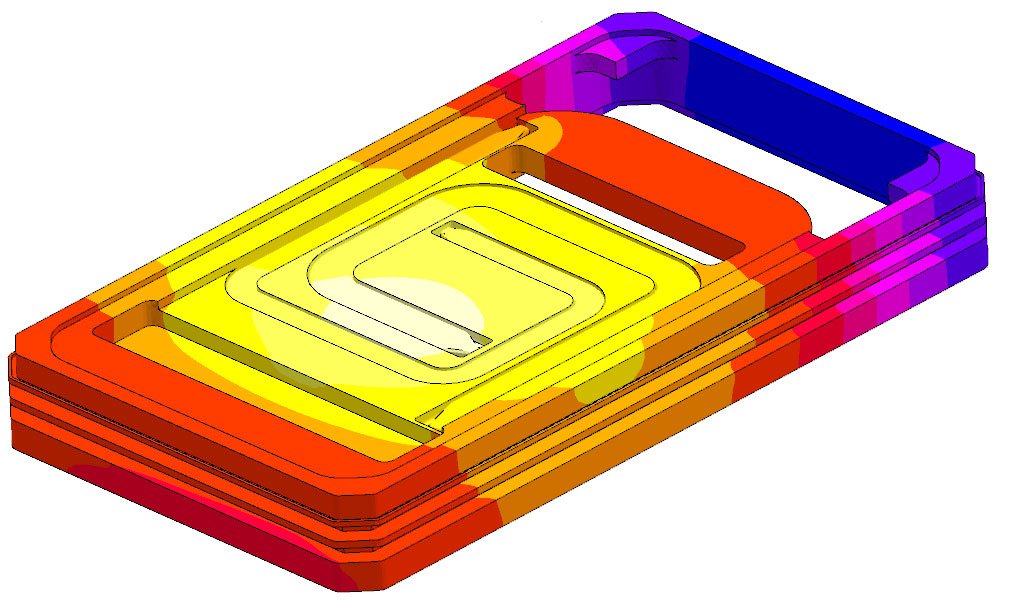
This type of analysis determines temperature distribution under equilibrium conditions, neglecting time-dependent effects. The model can be developed for an FEM or CFD solver, depending on the desired mapping for simulating conduction, convection, and radiation heat transfer mechanisms.
This allows for tracking temperature evolution over time to study behavior during transient operations. Again, the simulation approach can utilize either Finite Elements or Finite Volumes.
Finite Volume CFD solvers allow for highly detailed modeling of the interaction between fluids and solids, determining the exact convective heat transfer coefficients on wetted surfaces.
Thermo-structural analysis determines the state of deformation and stress resulting from the combined effects of temperature and component assembly constraints. Once the temperature distribution is known, this information is used as a load condition to determine the extent of thermal expansion and thermal stresses induced on the component.
Thermo-optical analysis evaluates the effect of thermal distortions on lenses or reflective bodies. Unlike structural thermal expansion, in thermo-optical analysis, distortion is expressed using indicators that measure the deviation of the optical surface from the nominal geometry.
Validate your product before you build it.
What if you could reduce your prototyping costs by up to 80%? Would you like to know how?
With computer simulation, we help you predict your product's performance under real operating conditions before it is manufactured. Partner with us to eliminate design errors, optimize performance, and bring better products to market faster. Contact us today for a free consultation.
Contact us todayCAE Analysis Software
Looking to integrate Virtual Prototyping into your engineering workflow?
Discover our range of CAE software solutions and expert mentoring services. Our specialists will help you select the solution that best fits your needs and ensure its successful integration into your product development process. Contact us today for a free technical assessment.
View all softwareSimcenter Femap Thermal Solver
In addition to Nastran’s thermal analysis capabilities, Femap includes the finite volume Thermal Solver and Advanced Thermal Solver, providing advanced thermal analysis capabilities.
Simcenter 3D Thermal
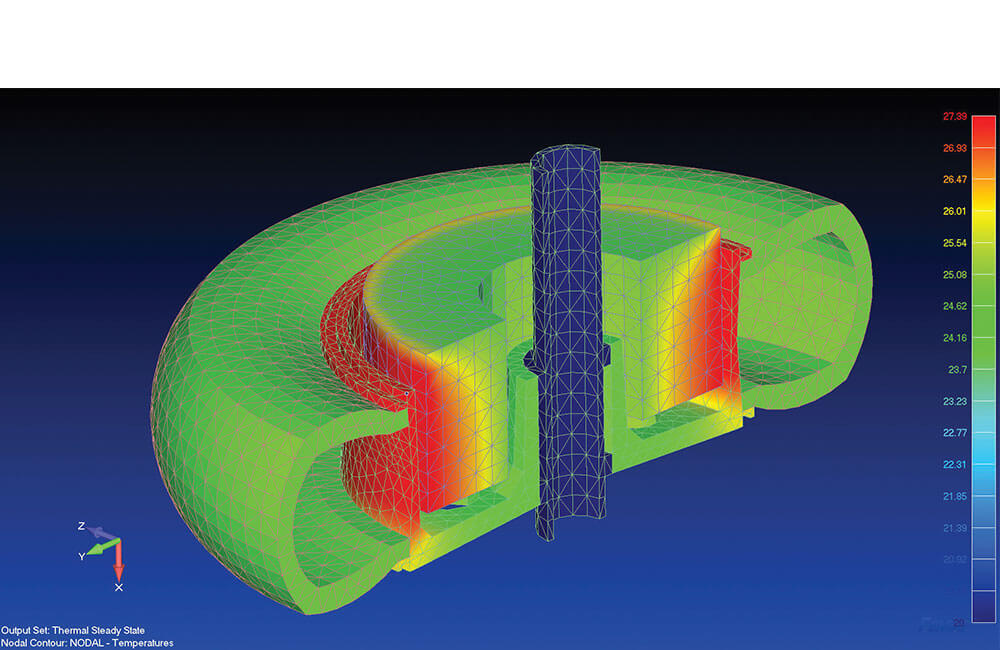
Simcenter 3D Thermal analysis tools enable temperature distribution to be calculated at every point in the system using heat transfer equations. It also provides dedicated tools for the thermal analysis of electronic and space systems.
Simcenter FLOEFD Thermal
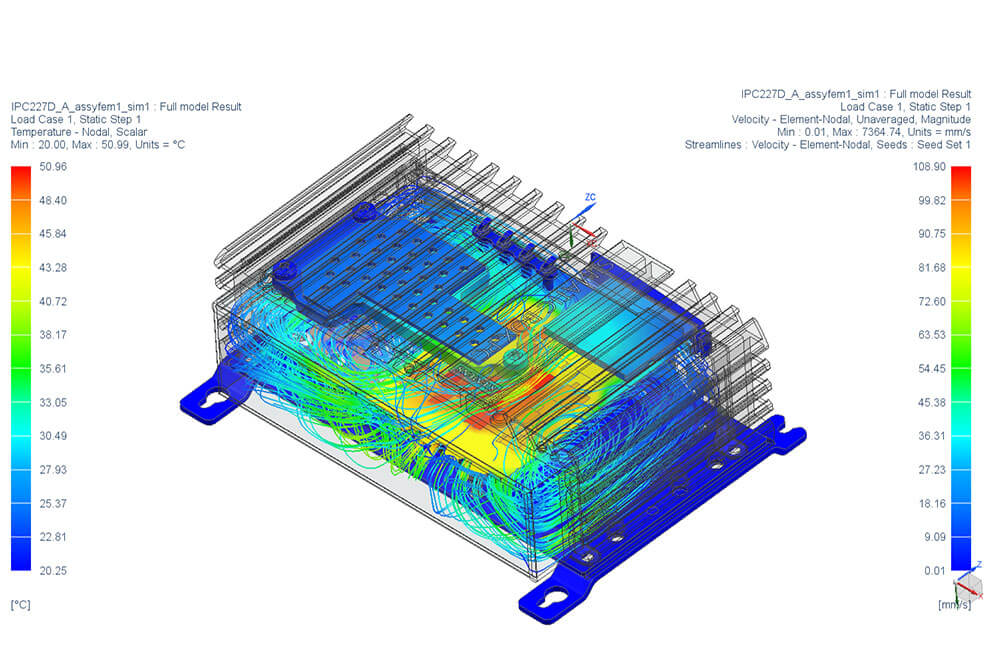
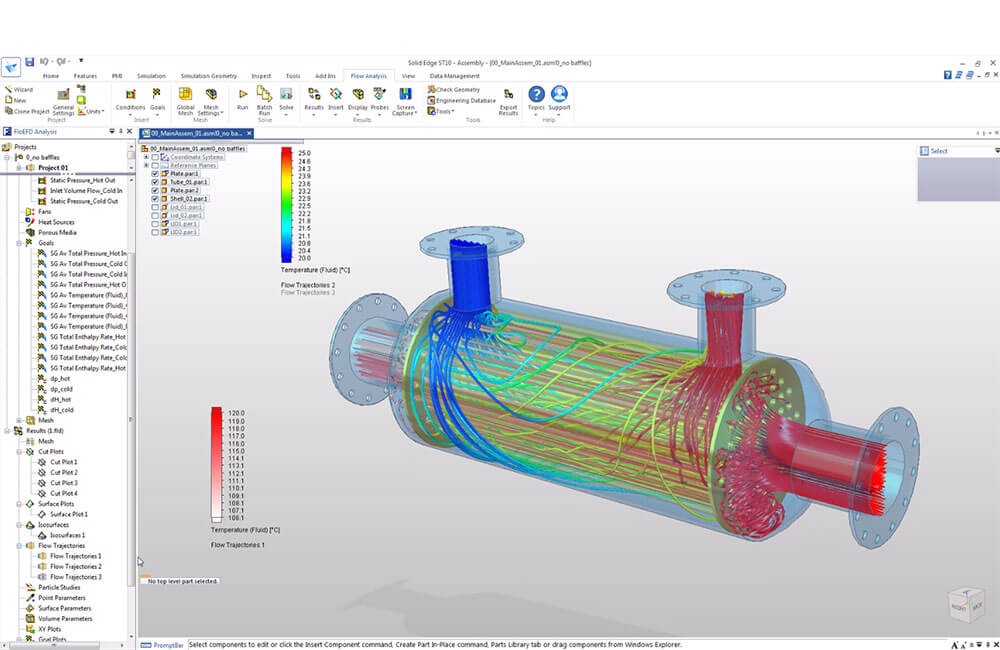
Simcenter FLOEFD enables conjugate heat transfer simulation between fluids and solids and provides dedicated modules for the thermal analysis of electronic systems, LED lighting, and HVAC systems.
Simcenter STAR-CCM+
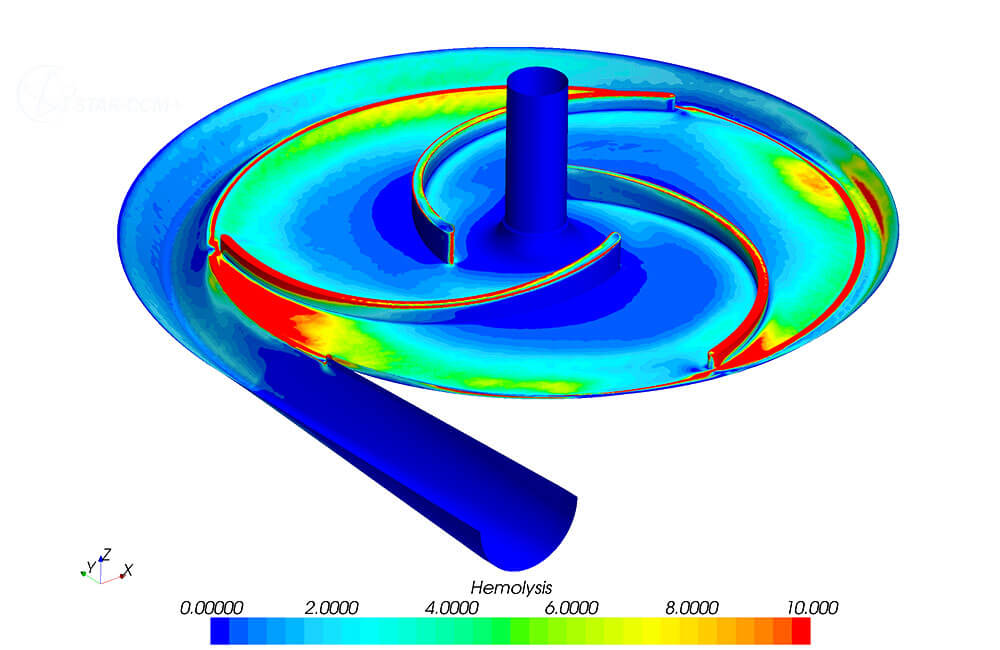
STAR-CCM+ is a multiphysics simulation tool focused on computational fluid dynamics (CFD), integrating a wide range of physical domains and design space exploration tools into a single environment.