The problem
In modern transmission systems, structural housings are much more than protective enclosures. They play a critical role in maintaining shaft alignment, bearing positioning, and the stability of mounting interfaces while withstanding complex operating loads. At the same time, they must satisfy demanding requirements for stiffness, weight, packaging, and manufacturability, particularly when produced by casting processes.
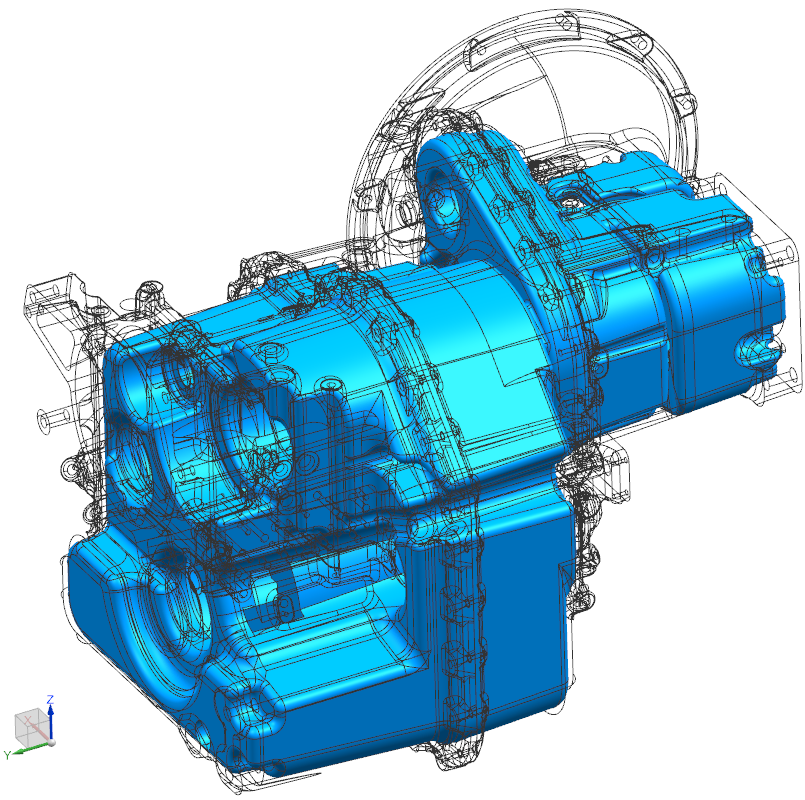
The objective of this project was to develop an optimized internal ribbing strategy for a transmission housing starting from a deliberately simplified CAD model that defined only the minimum wall thicknesses, functional interfaces, and packaging constraints. The challenge was not simply to add material, but to place it where it would provide the greatest structural benefit while minimizing weight and complying with casting design constraints, including draft direction and manufacturable geometries.
To achieve this, the project combined topology optimization for stiffness-driven design with detailed finite element verification incorporating realistic contact conditions, bolt preloads, bearing loads, and static and fatigue assessments.
The challenge
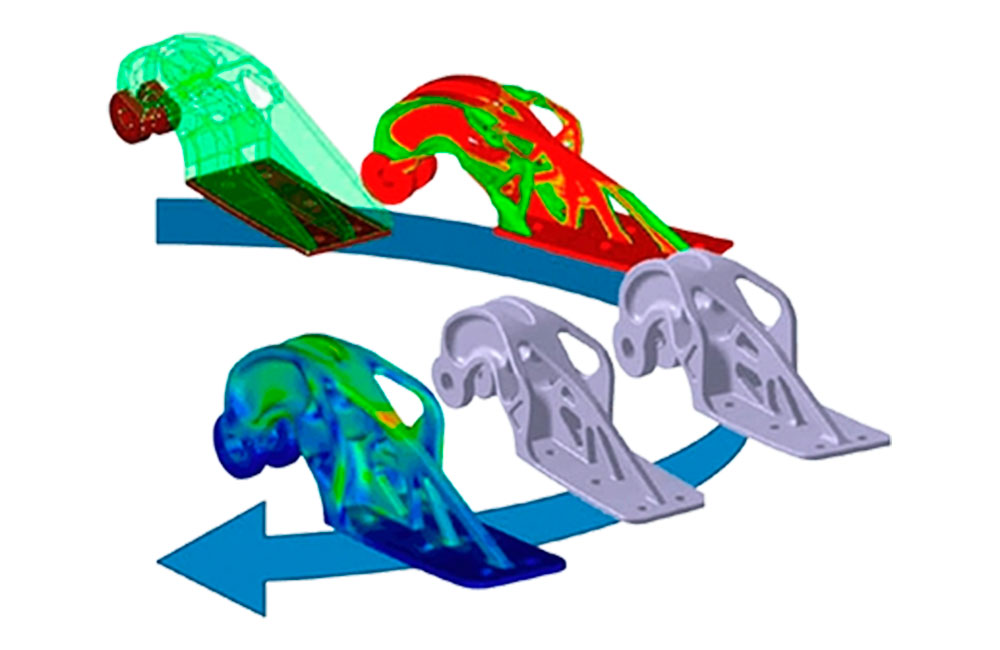
SmartCAE developed a structured simulation workflow that transformed the initial unribbed housing into a fully optimized and validated structural design.
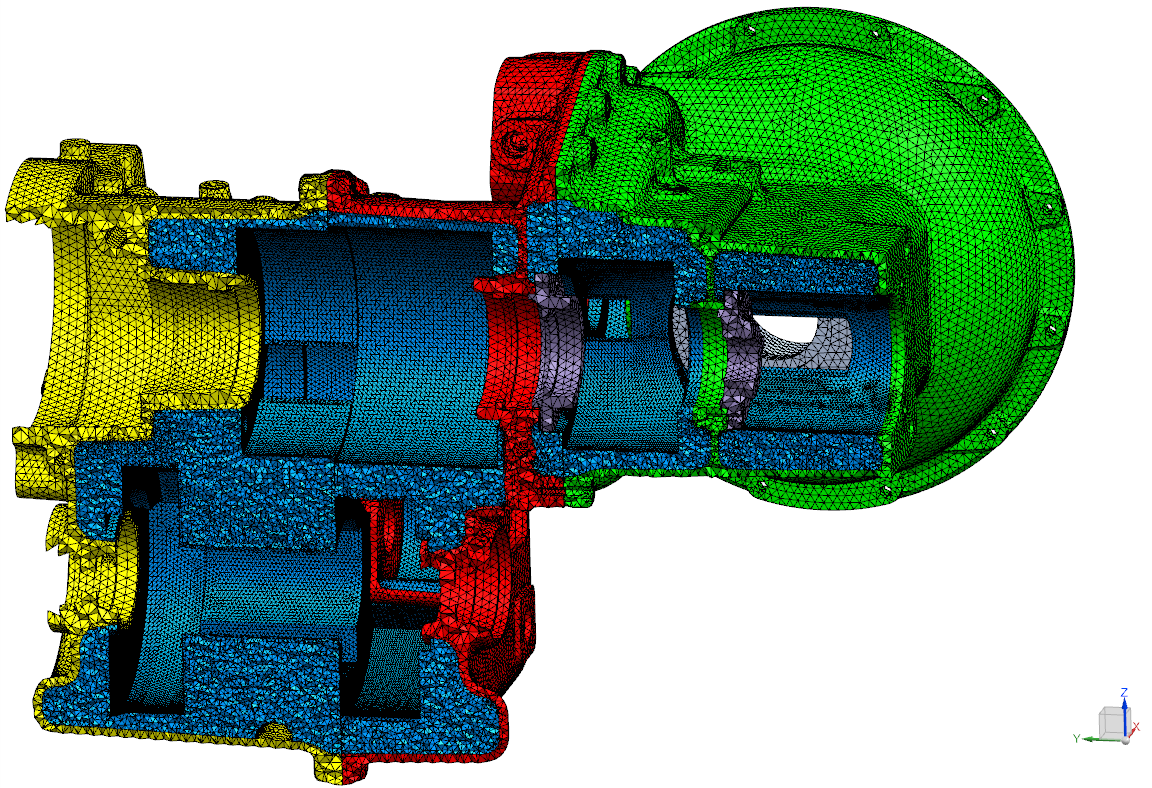
The first stage involved the creation of a simplified finite element model in which the design space available for optimization was carefully defined, excluding internal clearances, functional interfaces, and non-modifiable regions. Topology optimization was then performed with stiffness as the primary objective while incorporating manufacturing constraints representative of the casting process. This ensured that the optimization results were not only mathematically optimal but also directly applicable to production.
The resulting material distribution was interpreted and converted into an engineering-ready rib layout compatible with manufacturing requirements and assembly interfaces.
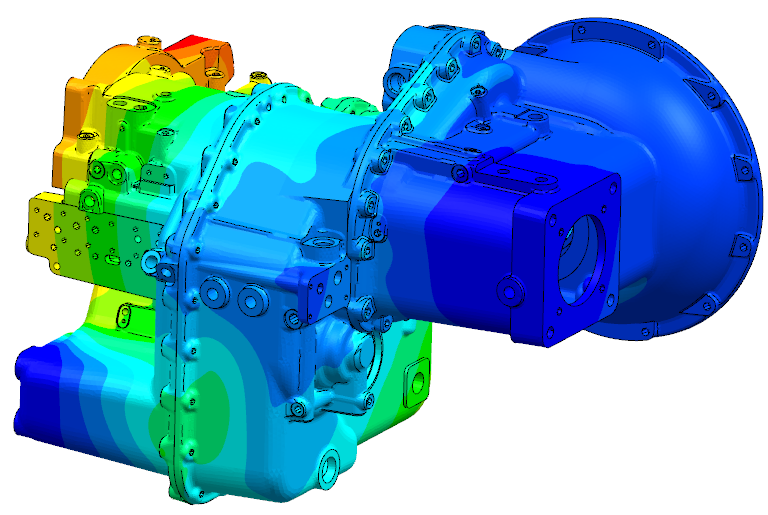
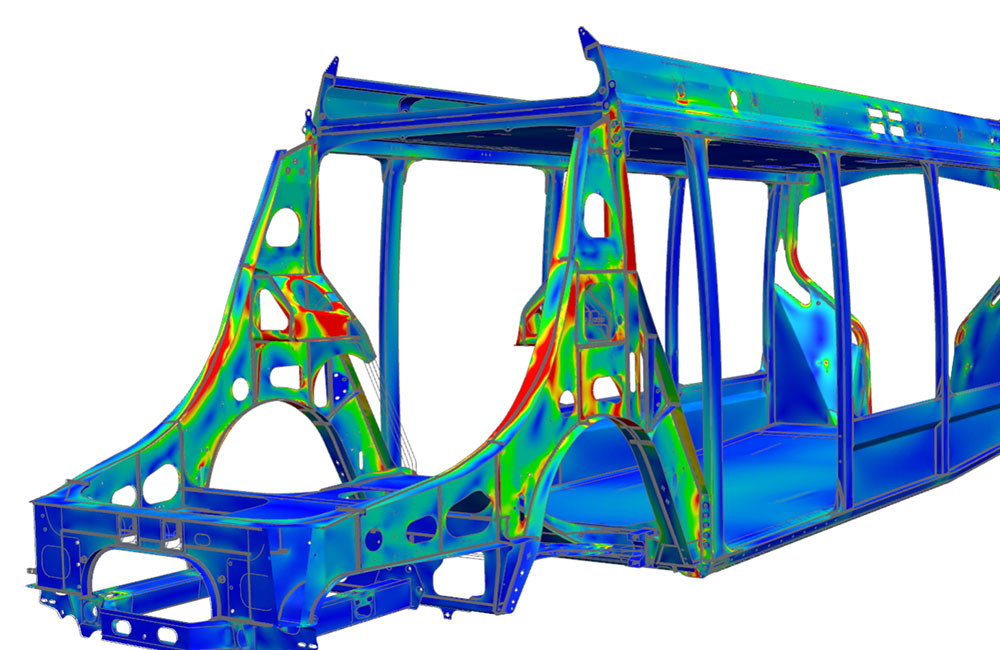
A second, high-fidelity finite element model was subsequently developed, introducing realistic contact interactions, bolt preload conditions, and representative loading at the bearing seats. This detailed analysis identified local stress concentrations, guided targeted design refinements, and verified the complete assembly for stiffness, static strength, fatigue life, and bolted joint integrity before final release for industrialization.
Our contribution
The simulation-driven workflow enabled the customer to replace traditional trial-and-error design iterations with an objective engineering process based on structural optimization and progressively refined CAE validation.
By identifying the optimal rib configuration early in the development process, the risk of discovering structural issues during prototype testing—or after tooling release—was significantly reduced, resulting in shorter development times and lower engineering costs.
The optimized design achieved an effective balance between stiffness, weight, and manufacturability while fully respecting the constraints of the casting process. Moreover, the integrated verification of contacts, bolt preloads, and operational loads provided confidence in the structural integrity of the complete assembly throughout its service life, including fatigue performance.
The result was a robust, production-ready transmission housing with improved structural efficiency, reduced technical risk, and a faster path to industrialization.
Benefits for the client
By relying on SmartCAE for this type of activity, the client benefits from a faster and more robust decision-making process, as geometric choices are not driven by successive trial-and-error iterations, but by a combination of structural optimization and progressively more realistic CAE assessments. This approach reduces the risk of identifying critical issues only during the prototyping stage or, even worse, after drawings for tooling and molds have already been released, when modifications become slow and costly.
A “guided” rib design process makes it possible to achieve an effective balance between stiffness, weight, and manufacturability, while keeping the technological constraints typical of cast components and subsequent machining operations under control. In addition, the integrated assessment of contacts, preload conditions, and operating loads makes it possible to evaluate the behavior of the assembly as a whole, rather than of the individual component alone, thereby increasing product reliability and confidence in meeting requirements throughout its service life, including fatigue-related phenomena.
In summary, the main benefit is having a single engineering partner capable of translating complex structural requirements into consistent, verifiable design choices that are ready for industrialization.
Gallery
Validate your product before you build it.
What if you could reduce your prototyping costs by up to 80%? Would you like to know how?
With computer simulation, we help you predict your product's performance under real operating conditions before it is manufactured. By identifying design issues early, you can minimize costly iterations, reduce development time, and launch reliable products right the first time.
Contact us todayFinite Element Structural Analysis FEA
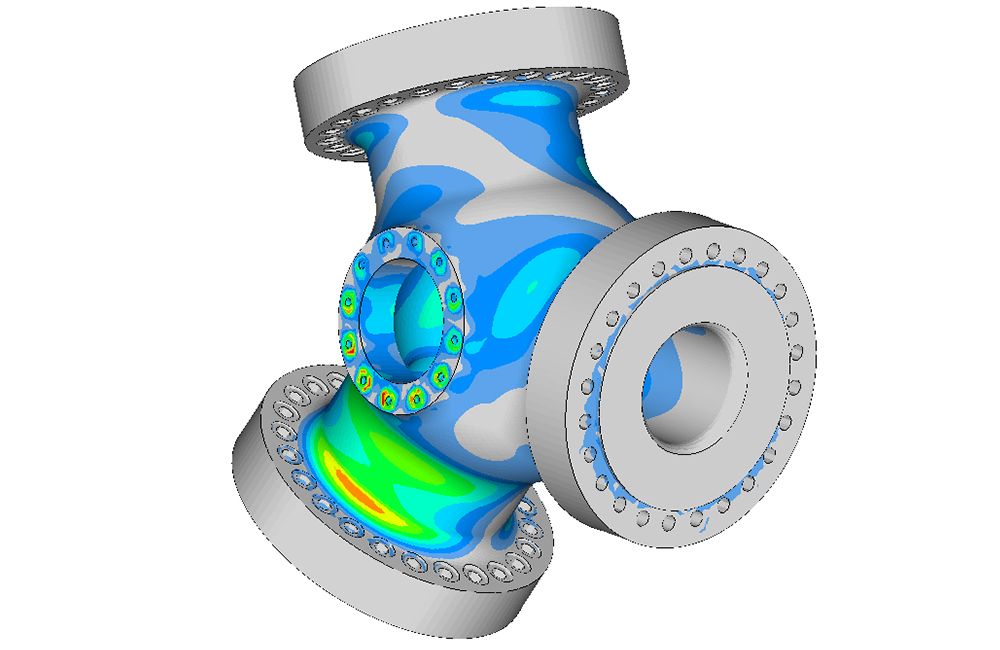
Using finite element analysis FEA, we help companies identify potential product performance issues and implement design improvements long before physical prototypes are built. Learn more about our finite element analysis services.
Fatigue & Durability Analysis
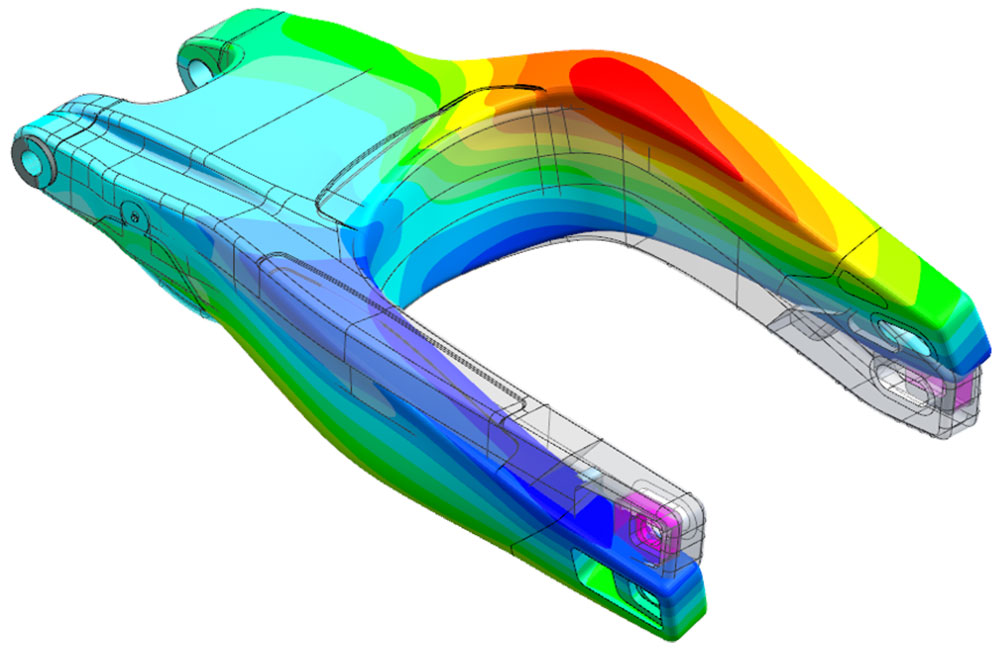
Prevent structural failures caused by cyclic and dynamic loading through advanced fatigue simulations. We have the expertise and tools to accurately predict the fatigue life of products subjected to variable static loads and vibration-induced stresses.
Design Optimization
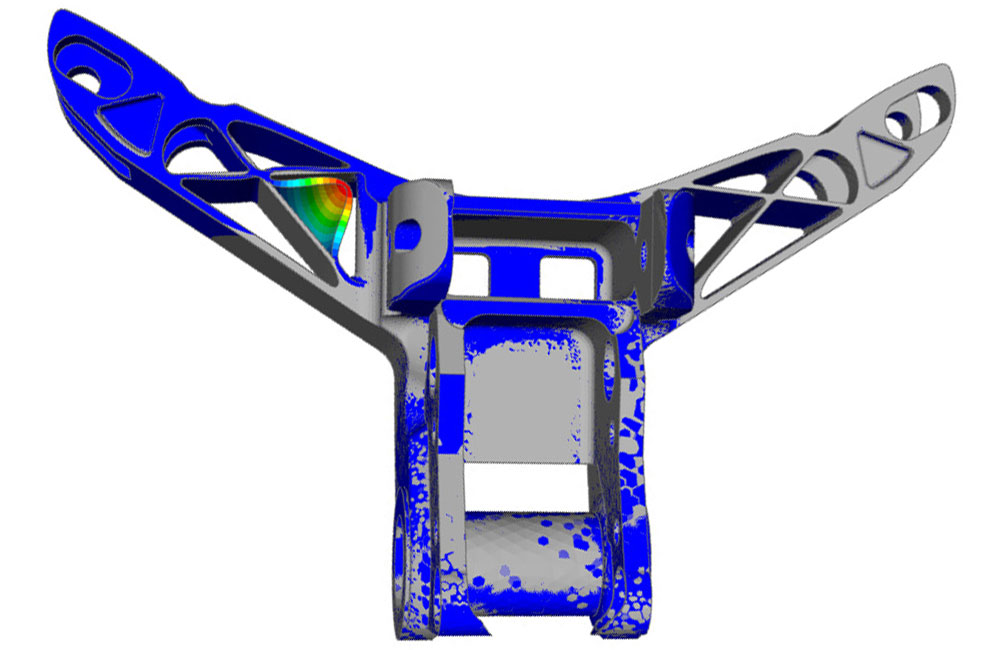
We have extensive experience in design optimization for automotive, aerospace, and industrial applications. Our expertise is particularly strong in optimizing laminated composite structures to maximize performance while minimizing weight.
CAE Analysis Software
Looking to integrate Virtual Prototyping into your engineering workflow?
Discover our range of CAE software solutions and expert mentoring services. Our specialists will help you select the solution that best fits your needs and ensure its successful integration into your product development process. Contact us today for a free technical assessment.
View all softwareSimcenter Optistruct
Design smarter, lighter, and more efficient products with Simcenter Optistruct, the FEA solver that combines advanced analysis and structural optimization in a single integrated platform. Reliable, scalable, and state-of-the-art, it is the ideal choice for taking your product engineering to the next level.
Simcenter 3D
Simcenter 3D is a modern CAE environment that enables rapid product performance evaluation by combining a powerful geometric modeller with an associative pre-processor and integrated multiphysics solvers. Simcenter 3D can perform simulations using geometry created in any CAD system.
Simcenter Femap
Simcenter Femap is a popular finite element analysis software solution that enables structural, dynamic, thermal, and fluid dynamics simulations of products. Simcenter Femap interfaces with any CAD modeller and with leading FEM software solutions.