The problem
In the world of supercars, the monocoque is far more than a structural shell for the powertrain and passenger compartment—it is the backbone that defines handling precision, perceived quality, and long-term durability. As vehicle performance increases, so do the structural demands imposed by high torque, ultra-high-grip tires, aerodynamic loads, and continuous acceleration and braking.
Composite materials are the natural choice for these applications because they combine exceptional stiffness, lightweight performance, and outstanding design freedom. However, these advantages can only be achieved through careful control of laminate design, manufacturing repeatability, and the interfaces between structural regions with different functions. During product development, there is often a tendency to introduce “defensive” reinforcements that increase laminate complexity, manufacturing costs, and maintenance effort without delivering proportional performance benefits.
For years, SmartCAE has helped manufacturers strike the right balance between structural performance and industrialization, bringing extensive expertise in composite monocoques and structural subsystems developed for motorsport applications, where laminate architecture, tooling constraints, and engineering details determine whether a promising prototype becomes a truly manufacturable component.
The challenge
The objective of the project was to optimize the composite monocoque of a high-performance supercar, improving its stiffness-to-weight ratio while preserving the original structural philosophy.
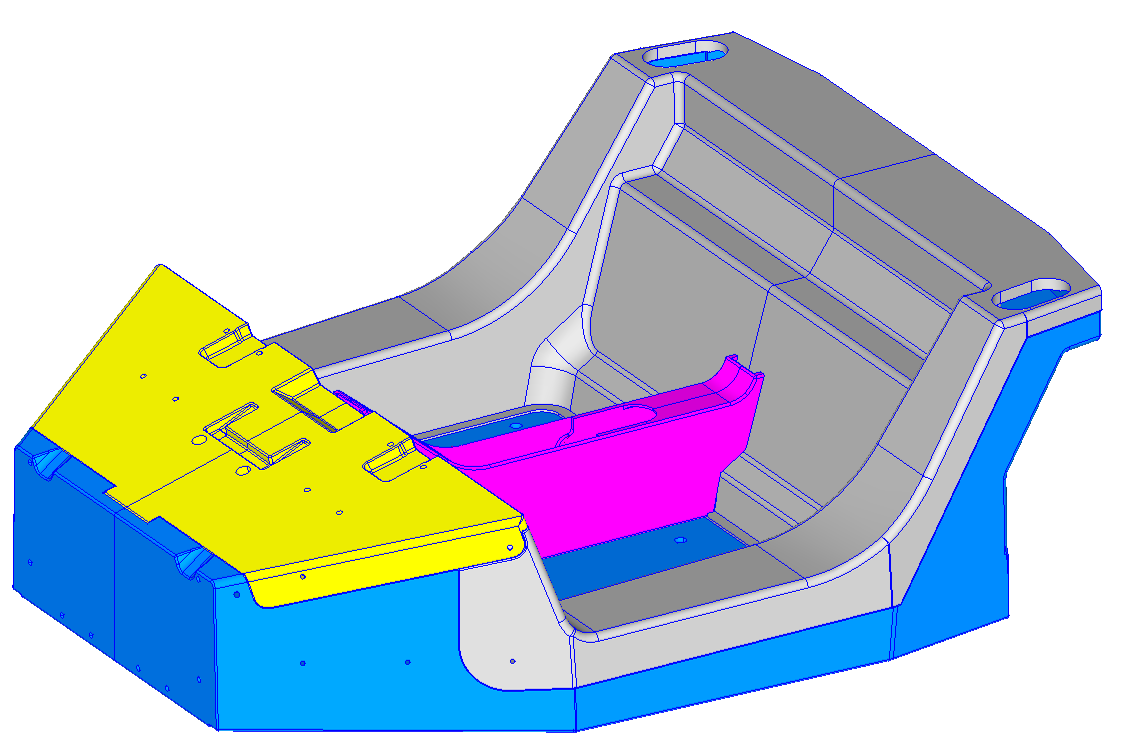
The engineering challenge extended well beyond reducing mass. The optimized design had to maintain overall torsional stiffness while ensuring consistent structural behavior across the various functional areas of the monocoque, including the main structural modules, side sills, central tunnel, and subsystem attachment regions.
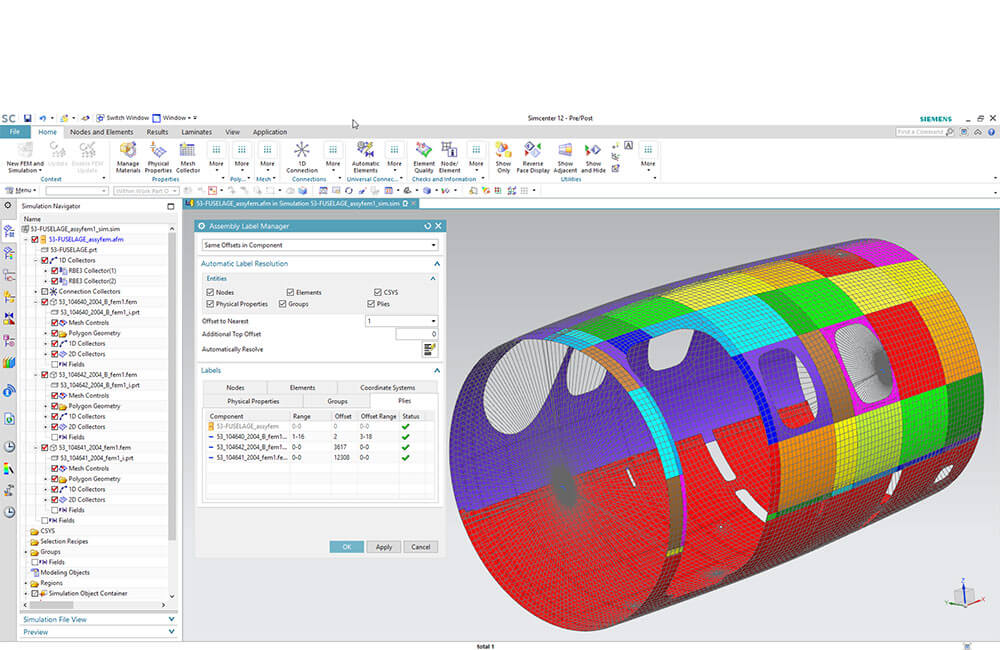
The project began with a detailed finite element characterization of the existing structure, followed by laminate optimization. Design variables included the number of plies, reinforcement type (woven fabrics and unidirectional plies), allowable fiber orientations, and local laminate thickness distribution, all while respecting realistic manufacturing and tooling constraints.
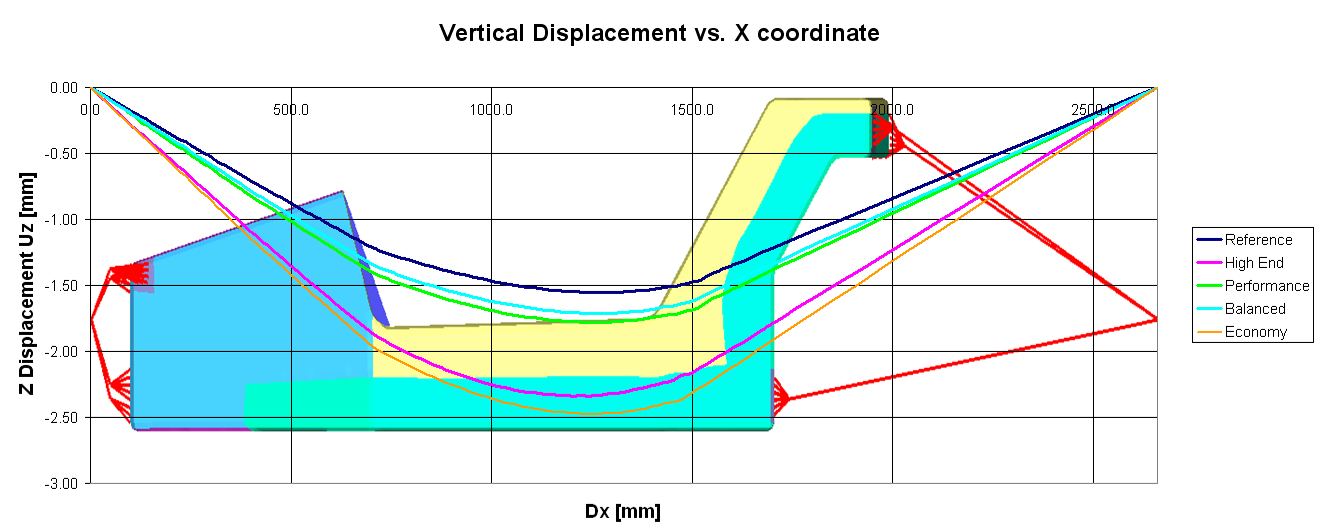
A key aspect of the project was the adoption of a scenario-based optimization strategy. In addition to identifying the highest-performance solution, more balanced configurations emphasizing manufacturing simplicity and process robustness were also investigated, providing realistic alternatives depending on the manufacturer’s priorities, whether maximum structural performance, ease of production, or manufacturing reliability.
Because laminate architecture is an integral part of the structural design of motorsport and hypercar monocoques, every optimization proposal had to remain physically realistic, avoiding impractical fiber orientations while respecting ply deposition and composite consolidation processes. Otherwise, the “optimal” solution would remain purely numerical rather than manufacturable.
Our contribution
SmartCAE managed the complete engineering workflow, from developing the simulation model to delivering multiple optimized laminate configurations suitable for direct comparison.
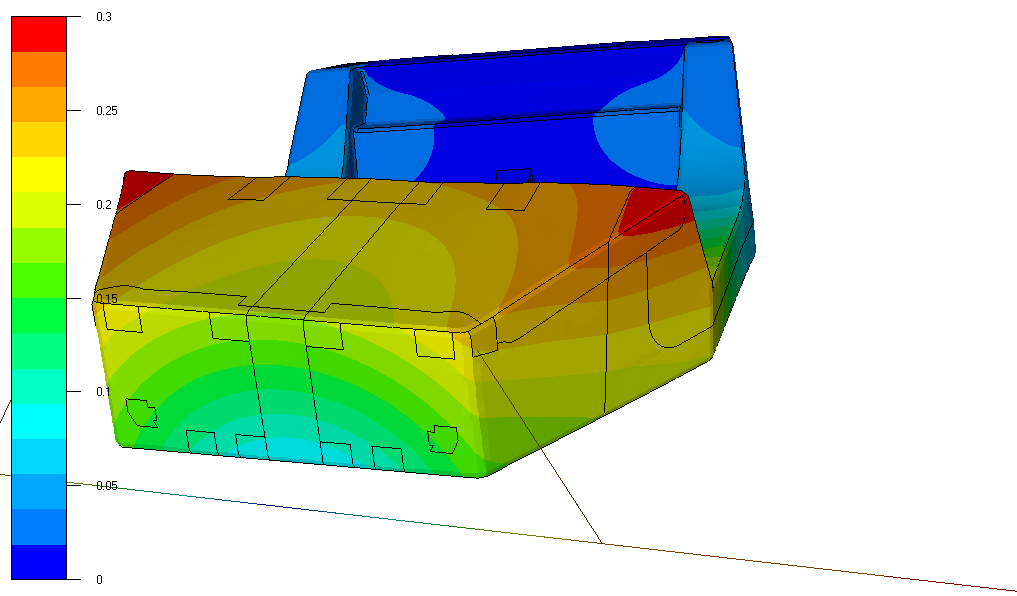
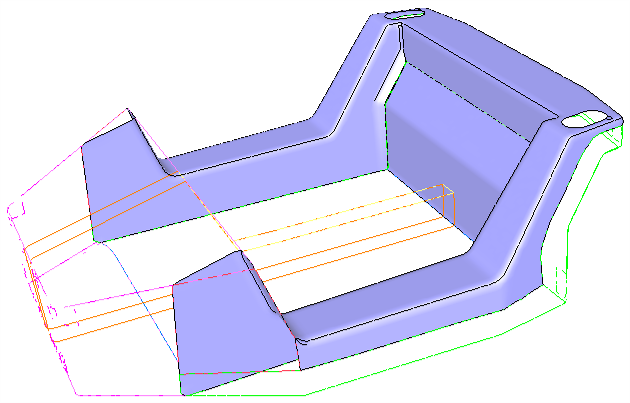
Starting from the available CAD geometry, material data, and existing laminate sequence, we developed a finite element model specifically designed to evaluate torsional stiffness using boundary conditions representative of standardized motorsport testing. This provided an objective engineering baseline for comparing design alternatives and assessing the effectiveness of every modification.
The optimization combined two complementary methodologies. The first was a knowledge-based approach driven by engineering indicators such as strain energy distribution and principal stress and strain directions, enabling highly targeted local reinforcements where they delivered the greatest structural benefit.
The second approach employed semi-automated parametric optimization to rationalize stacking sequences and laminate thickness distributions while maintaining industrial constraints, including unchanged material systems, standard fiber orientations, tooling compatibility, and prepreg handling requirements.
This engineering methodology reflects common motorsport practice, where optimization success depends as much on engineering judgment as on numerical algorithms. Every proposed laminate configuration was therefore critically reviewed and refined to ensure full manufacturability, simplifying the laminate wherever possible while introducing local reinforcements only where they generated measurable structural improvements.
The result was a portfolio of optimized laminate solutions demonstrating that even an already highly efficient composite monocoque can achieve further gains through expert laminate engineering, transforming numerical simulation into practical design decisions.
Benefits for the client
For a supercar manufacturer, partnering with SmartCAE for composite structure optimization means gaining an engineering process focused on practical decision-making rather than producing simulation reports that are difficult to implement in production.
The first benefit is a significant reduction in technical risk. Torsional stiffness is evaluated using repeatable and comparative engineering methodologies, while laminate modifications are validated according to the same principles used during structural qualification.
The second advantage is the ability to balance structural performance with manufacturability. In composite engineering, excessively complex laminates often increase scrap rates, production cycle times, and sensitivity to manufacturing variability. Conversely, a rationalized laminate architecture improves process robustness, manufacturing repeatability, and ultimately reduces both production costs and time-to-market.
A further competitive advantage comes from SmartCAE’s motorsport expertise, including the intelligent selection of woven and unidirectional reinforcements, the strategic introduction of local strengthening without unnecessarily increasing weight, optimization of fiber orientations according to structural load paths, and careful engineering of structural interfaces that frequently become critical design bottlenecks.
Finally, by delivering multiple optimized design alternatives instead of a single solution, SmartCAE enables manufacturers to make informed engineering decisions based on the priorities of each development program while maintaining a robust technical foundation for the subsequent detailed design and physical validation phases.
Gallery
Gallery
Validate your product before you build it.
What if you could reduce your prototyping costs by up to 80%? Would you like to know how?
With computer simulation, we help you predict your product's performance under real operating conditions before it is manufactured. By identifying design issues early, you can minimize costly iterations, reduce development time, and launch reliable products right the first time.
Contact us todayFinite Element Structural Analysis FEA
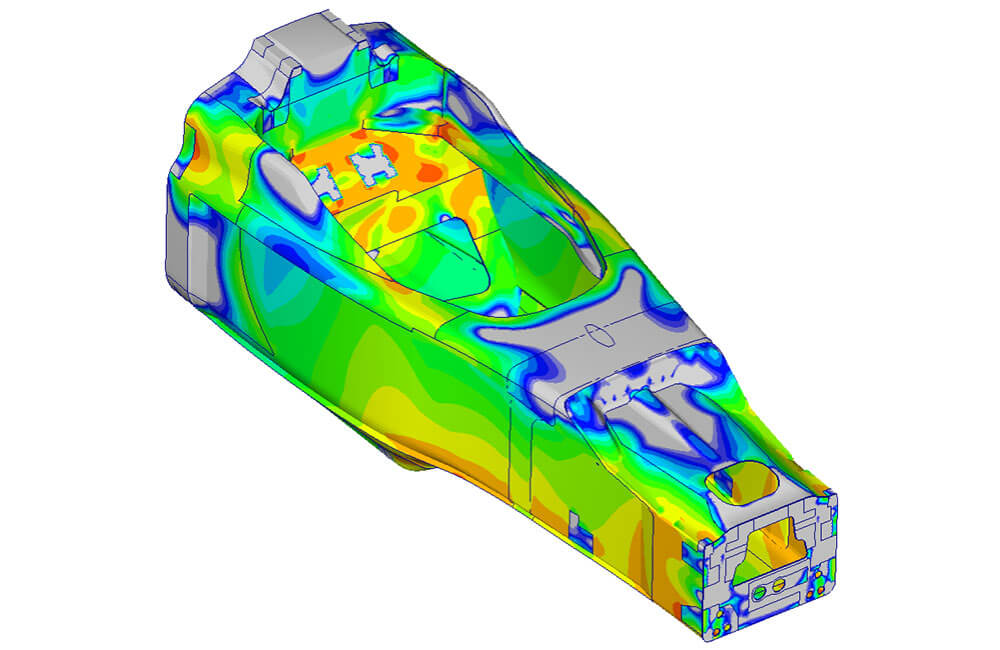
Using finite element analysis FEA, we help companies identify potential product performance issues and implement design improvements long before physical prototypes are built. Learn more about our finite element analysis services.
Composite Materials Engineering
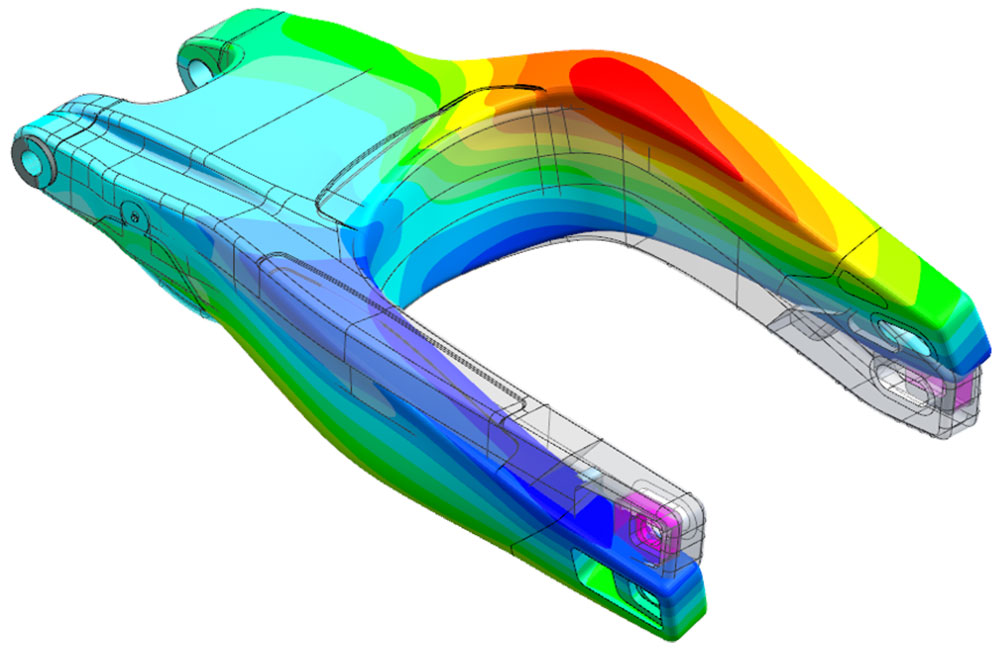
More and more components originally designed in metal are being replaced with high-performance composite materials such as carbon fiber, delivering superior mechanical performance while reducing weight. Let us help you design optimized composite structures.
CAE Analysis Software
Looking to integrate Virtual Prototyping into your engineering workflow?
Discover our range of CAE software solutions and expert mentoring services. Our specialists will help you select the solution that best fits your needs and ensure its successful integration into your product development process. Contact us today for a free technical assessment.
View all softwareSimcenter Optistruct
Design smarter, lighter, and more efficient products with Simcenter Optistruct, the FEA solver that combines advanced analysis and structural optimization in a single integrated platform. Reliable, scalable, and state-of-the-art, it is the ideal choice for taking your product engineering to the next level.
Laminate Tools
Laminate Tools is an integrated tool that simplifies the design, structural verification, and manufacturing of composite laminates. With Laminate Tools, you can overcome the limitations of traditional approaches to both FEM modelling and the generation of ply shapes and ply books for composite parts.
Simcenter 3D for Composites
Simcenter 3D is a comprehensive solution for product and process simulation of composite components manufactured using prepreg fibres and hand layup techniques with autoclave curing.