The problem
Compact engine and transmission systems combine gears, shafts, bearings, seals, and complex mechanisms within a limited space, where overall performance depends on the interaction between inertia, stiffness, damping, and internal forces. Although components may satisfy static design requirements, dynamic effects such as torque oscillations, speed fluctuations, unexpected bearing loads, and stability issues can emerge during operation, leading to premature wear and reduced reliability.
The objective of this project was to develop a high-fidelity multibody dynamics model capable of reproducing the engine’s real operating conditions, including bearing stiffness, gear interactions, friction, damping, and excitation sources. The model had to generate realistic load histories for structural and fatigue assessments while evaluating the influence of manufacturing tolerances, misalignments, and mass imbalance on the system’s dynamic behavior.
The challenge
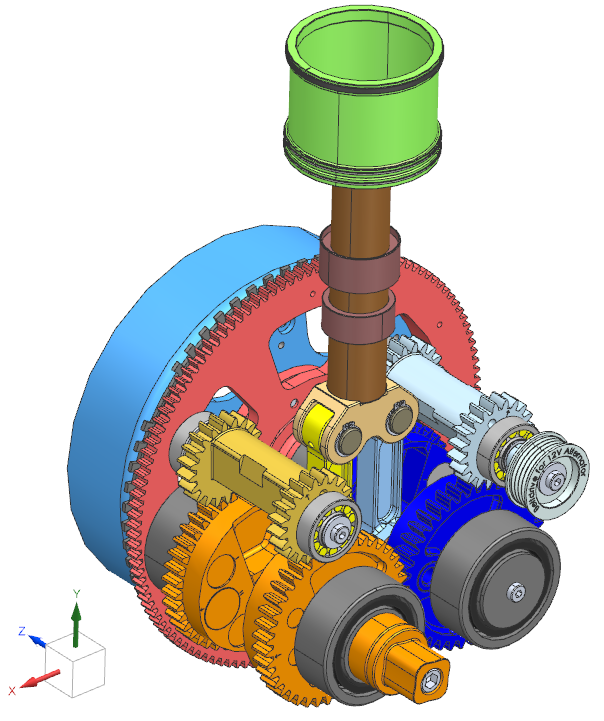
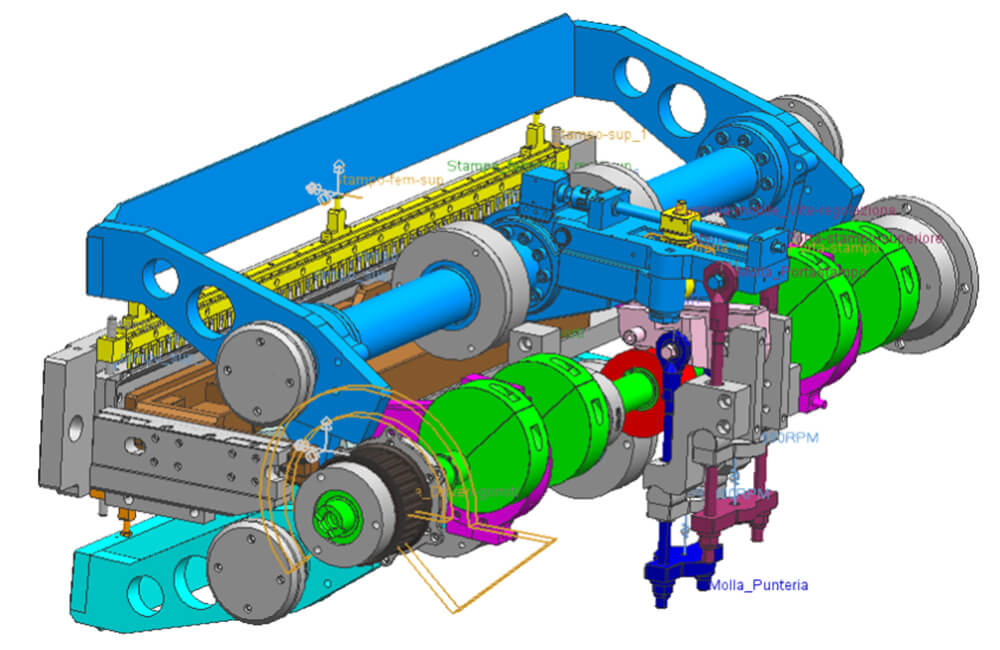
Starting from the complete 3D CAD assembly, SmartCAE developed a multibody dynamics model representing the engine architecture through rigid bodies, joints, and compliant constraints. Particular attention was given to accurately modelling bearing stiffness, friction losses, gear interactions, and the equivalent operating loads to reproduce realistic steady-state operating conditions.
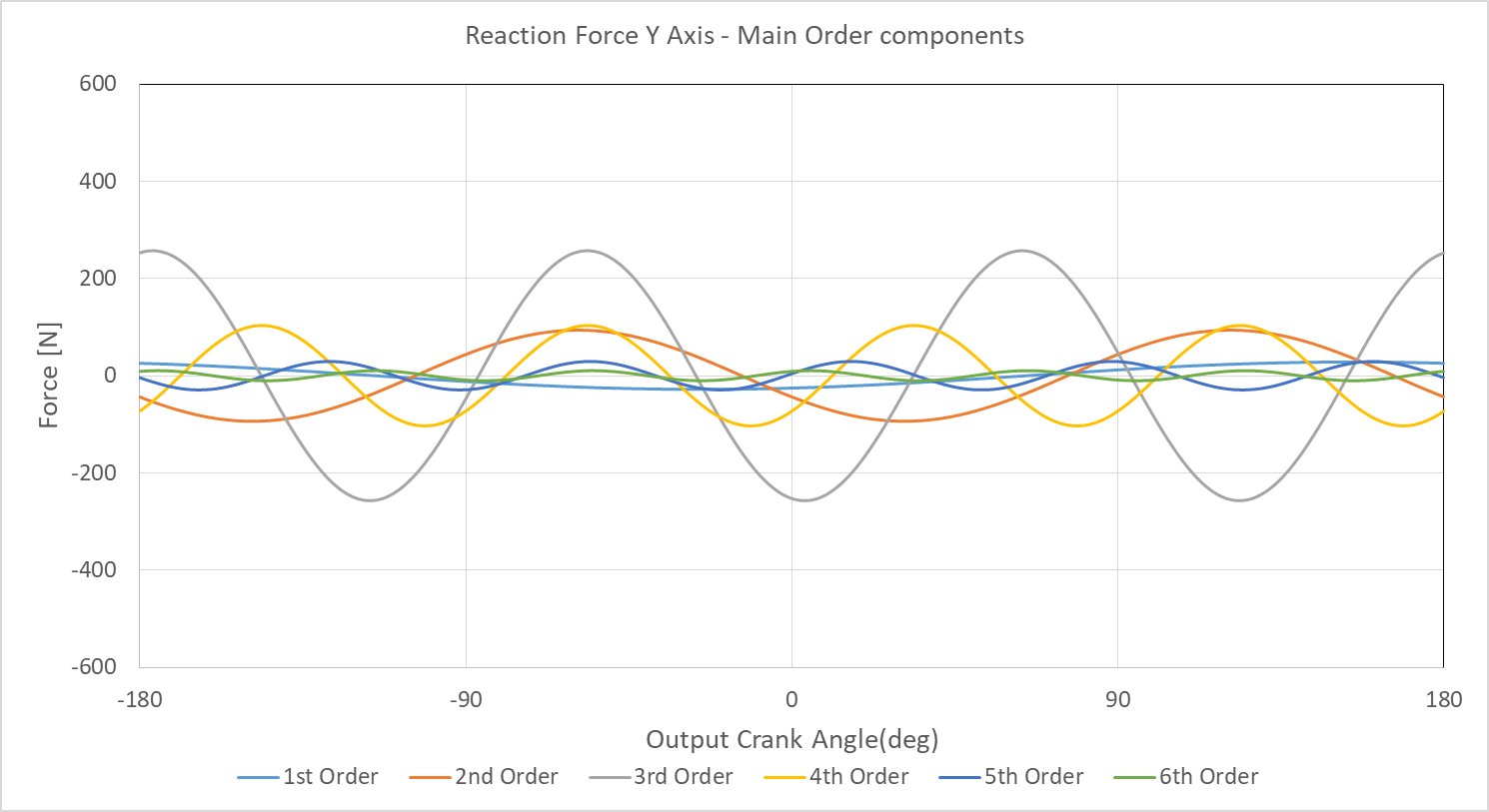
The simulation provided detailed time histories of forces, torques, and displacements throughout the transmission system, allowing the identification of the most highly loaded interfaces and the dynamic load paths between components.
A comprehensive sensitivity analysis was then carried out by introducing representative geometric tolerances, shaft misalignments, and mass imbalances. This enabled us to determine which imperfections were responsible for exciting unstable dynamic modes and generating undesirable loads, while distinguishing them from variations with negligible impact.
Based on these findings, alternative kinematic layouts and constraint configurations were evaluated to improve the intrinsic stability and robustness of the drivetrain, with each design solution validated through the same simulation methodology.
Our contribution
The project required addressing the dynamic behavior of an engine with an integrated transmission system and highly complex internal mechanisms, assessing its steady-state stability and the cyclic loads acting on the main components. From an engineering standpoint, this means building a multibody “digital twin” capable of reproducing not only the nominal motions, but also the combined effects of the actual stiffness of the supports, gear contacts, friction and losses, periodic excitations related to the combustion cycle, and the inertia of reciprocating components.
The main difficulty lies in the fact that stability does not depend on a single parameter, but on the interaction between kinematics, mass balancing, compliances, and damping, with behavior that can vary significantly even in response to small geometric deviations. Furthermore, in order to obtain load histories suitable for structural and durability assessments, an “average” analysis is not sufficient: it is necessary to reconstruct the amplitude and phase of the oscillations, distinguish quasi-static contributions from dynamic ones, and map how forces are redistributed across bearings, joints, and constraints throughout the cycle.
On this basis, the challenge becomes twofold: reproducing in the simulation the conditions that may trigger motion anomalies while, at the same time, maintaining a sufficiently accurate level of modeling to ensure that the extracted loads and the resulting design conclusions are reliable.
Benefits for the client
The project provided the customer with a clear, physics-based understanding of the engine’s dynamic behavior under real operating conditions, transforming observed performance issues into measurable and verifiable engineering causes.
The realistic load histories extracted from the simulations became a reliable input for finite element analyses, fatigue assessments, and bearing and seal durability evaluations, replacing conservative static assumptions with representative operating loads.
Furthermore, the quantified sensitivity to manufacturing tolerances and assembly deviations enabled the customer to define more effective production specifications and quality control procedures, focusing on the parameters that truly influence system performance.
By identifying more robust design solutions that minimize the effects of misalignment and imbalance, the project improved system reliability without relying on unnecessary overdesign. The result was a shorter development cycle, reduced technical risk, lower prototyping costs, and greater confidence in the final product before physical validation.
Gallery

Validate your product before you build it.
What if you could reduce your prototyping costs by up to 80%? Would you like to know how?
With computer simulation, we help you predict your product's performance under real operating conditions before it is manufactured. By identifying design issues early, you can minimize costly iterations, reduce development time, and launch reliable products right the first time.
Contact us todayMultibody Dynamics Analysis
Multibody dynamics (MBD) analysis enables the prediction of motion trajectories, velocities, and interaction forces within mechanical systems over time. By creating a digital twin of your product, we can evaluate its performance under real operating conditions before physical testing.
Fatigue & Durability Analysis
Prevent structural failures caused by cyclic and dynamic loading through advanced fatigue simulations. We have the expertise and tools to accurately predict the fatigue life of products subjected to variable static loads and vibration-induced stresses.